Best Free SEO Tools
Best Free SEO Tools: Building a zero-cost stack for 2026
Your CEO forwards an industry report predicting a 25% decline in traditional search engine volume by the end of 2026 (Gartner). The message is clear: figure out an AI search strategy immediately, but do it without increasing the software budget. You sit down to map out a new pillar page to capture this shifting intent, type in your core topic, and instantly hit a paywall. Reduced marketing budgets force solo SEOs to rely on limited platforms, but you do not have to settle for disjointed data. The Best Free SEO Tools for 2026 include Ahrefs Keyword Generator for research, Screaming Frog for technical audits, and Semrush's free tier for rank tracking. When combined strategically, these platforms allow you to execute a complete, topics-first SEO methodology without expensive monthly subscriptions.
A zero-cost tech stack often feels like assembling a puzzle with missing pieces. You bounce from one platform to another, manually exporting fragmented CSV files and trying to merge them into a cohesive strategy. This disjointed approach creates significant workflow interruptions. While you waste hours fighting aggressive freemium limits just to check a single competitor's backlink profile, your rivals are publishing fully optimized content. The pressure compounds when you realize that, according to Gartner, 79% of users already rely on AI-enhanced search for information discovery. Relying on isolated keyword lookups no longer cuts it when algorithms demand deep topical authority and strict intent matching across multiple channels.
You need a workflow that covers keyword discovery, technical site health, and off-page analysis without triggering upgrade prompts. Every time you migrate a blog or launch a new subdomain, the anxiety of undiscovered broken links or crawl errors looms large. Without access to enterprise-grade cloud crawlers, you risk losing hard-earned rankings due to simple, preventable technical oversights. This guide gives you the precise blueprint to avoid those pitfalls.
The solution is not begging leadership for a $150 monthly software license that will likely get denied anyway. The answer lies in changing your operational framework entirely. By moving away from a traditional keyword-first approach and adopting a topics-first content strategy, you can extract maximum value from free utilities. You will move from piecing together restricted freemium apps to orchestrating a strategic, zero-cost SEO tech stack built for the 2026 AI-driven search landscape. A complete strategic breakdown of the top platforms across core workflow categories will help you diagnose technical errors, map content gaps, and track your visibility against aggressive competitors. You just need the right sequence.
The topics-first SEO methodology
Search engines rank websites based on content quality, search intent, page experience, and trust, not on tool pricing. A smart strategy executed through free platforms will consistently beat a poorly planned campaign running on enterprise-grade software. The divide between success and failure comes down to methodology. Your Best Free SEO Tools will only perform as well as the framework guiding them.
Marketing teams must optimize simultaneously for Google's algorithm, AI answer engines, and social platforms. Traditional isolated keyword research fails in this multi-platform reality. Ten years ago, you could plug a seed term into a generator, sort by the highest search volume, and build a single page targeting that exact string. Today, that approach results in thin, disconnected content that fails to satisfy nuanced user journeys.
You need a reliable content planning tool to brainstorm, validate, and track queries without spending a dime. Piecing together generic keyword lists from a basic keyword discovery tool leaves you without a strategic roadmap or site structure. You end up with a massive spreadsheet of disconnected terms, guessing which ones should map to which pages. This lack of organization leads directly to keyword cannibalization and diluted page authority.
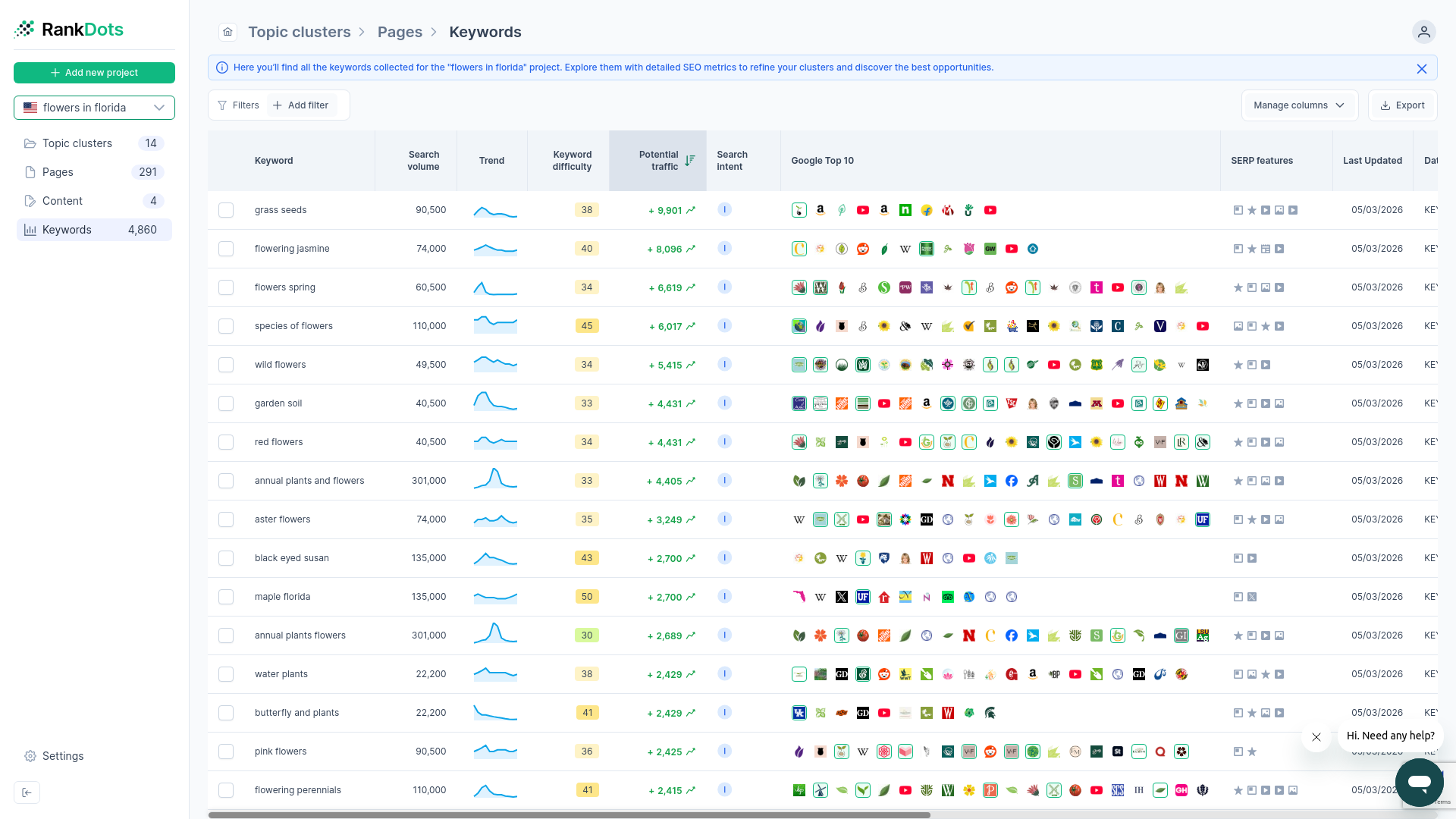
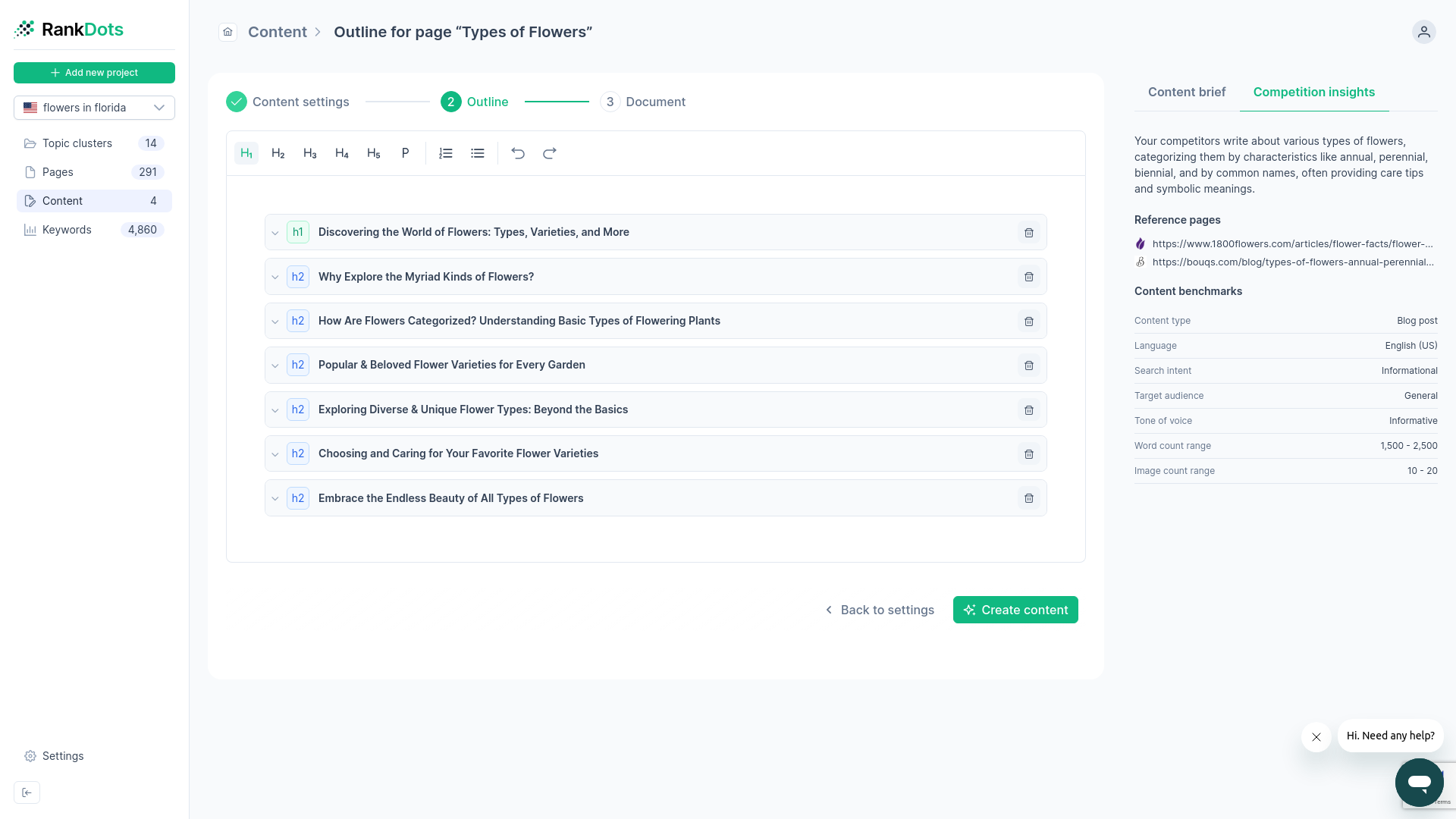
RankDots, acting as a complete Topical authority SEO tool, inherently structures your campaign workflow from broad topic down to specific pages and keywords, enforcing a strategic hierarchy (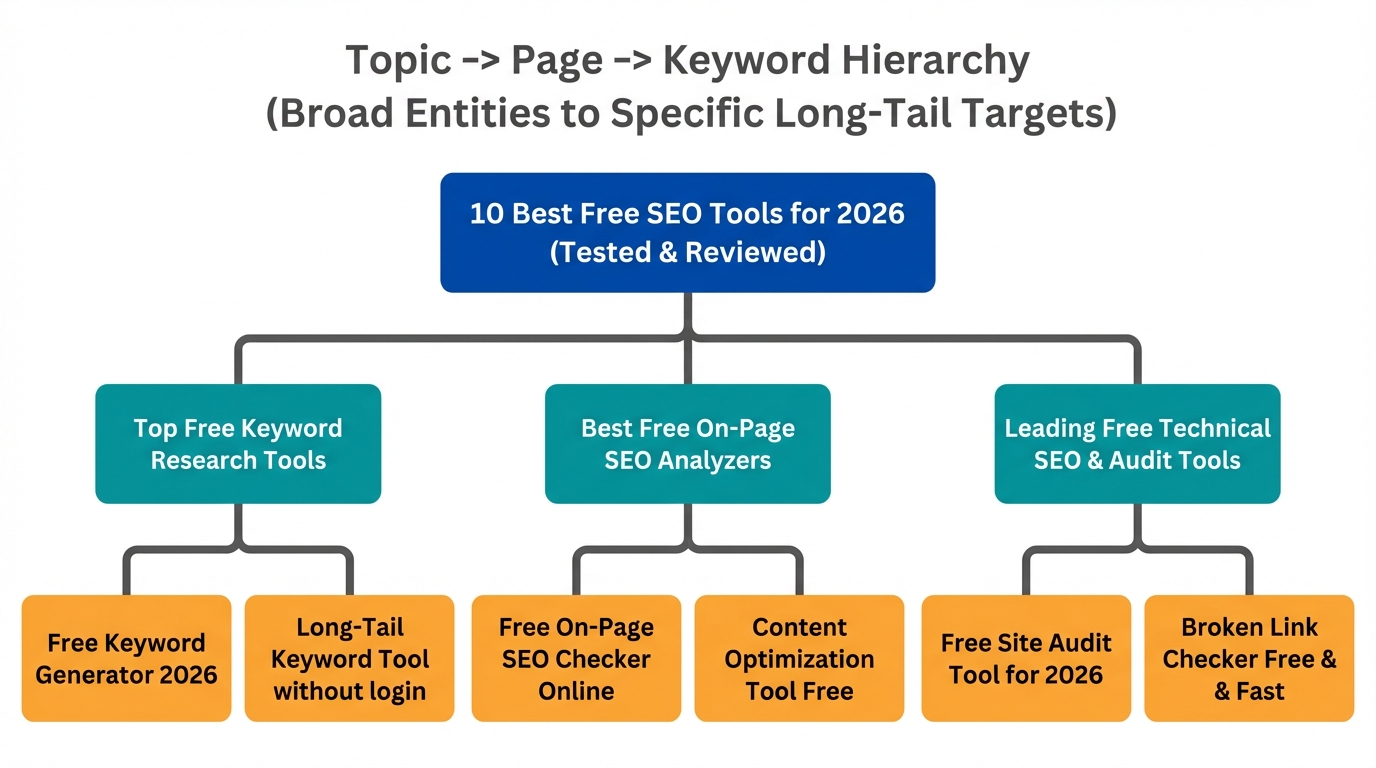
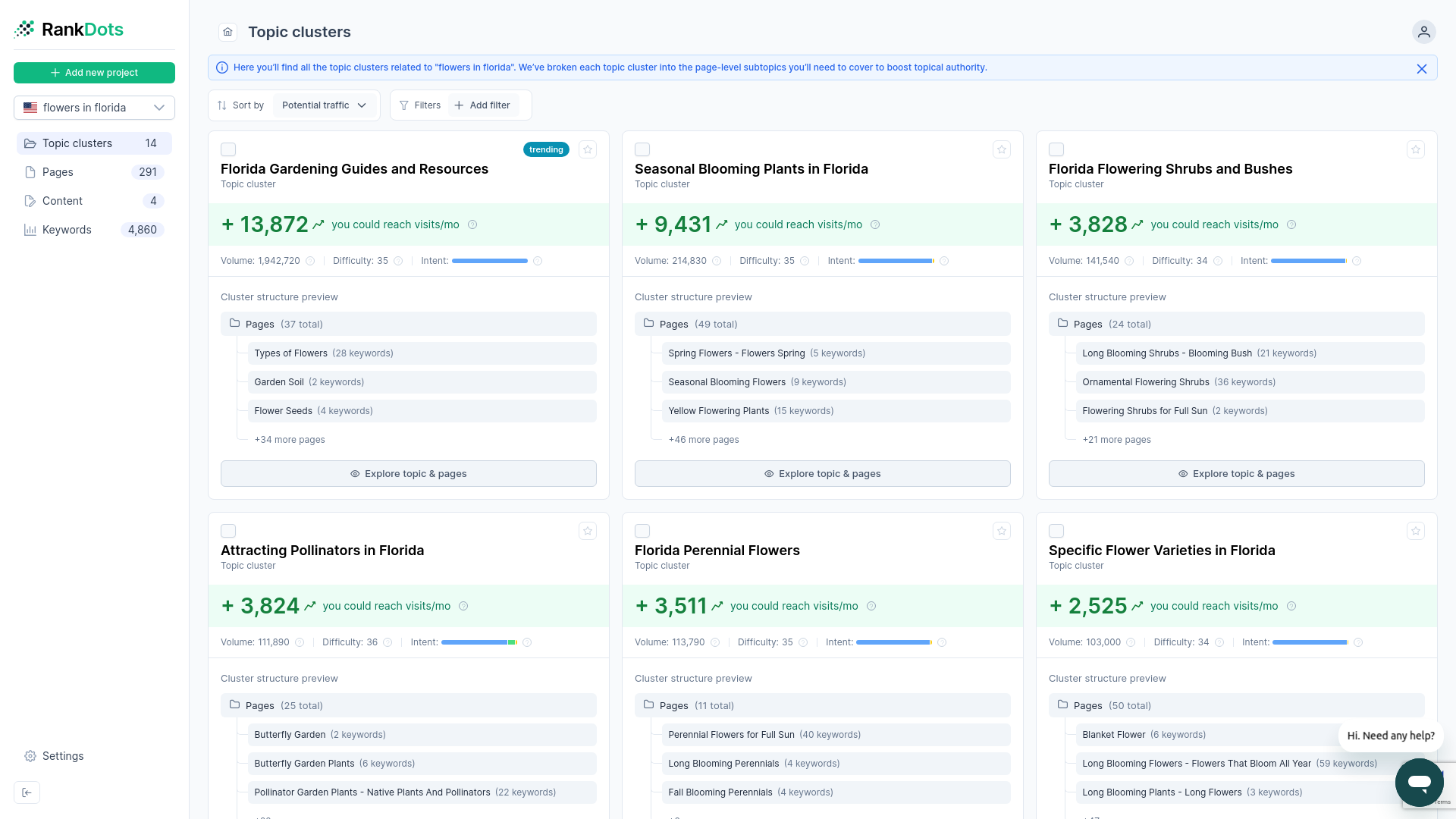
Consider a mid-sized B2B startup attempting to rank for inventory management. Under the old model, a solo marketer would look for the highest volume term like "inventory software" and try to cram it into every header tag. Under the topics-first methodology, you establish "Inventory Management" as the core topic. You then define specific pages: a definitive guide to warehouse auditing, a comparison of barcode vs. RFID tracking, and a template for stock reconciliation. Each page then targets a specific cluster of keywords.
This hierarchical approach completely changes how you use your zero-cost stack. Instead of burning your limited daily queries on random, top-of-funnel vanity metrics, you deploy your searches surgically. You use your limited queries to validate the specific sub-topics and answer the exact questions your audience asks. You build a highly structured internal linking architecture that signals deep expertise to both traditional crawlers and modern AI models.
When you build content around topics rather than isolated strings, your content naturally adapts to different discovery channels. A comprehensive guide on warehouse auditing easily fragments into short-form video scripts for social platforms, while the structured data and clear header hierarchy provide perfect extraction points for AI chatbots. You future-proof your visibility by ensuring your content actually answers the underlying intent.
Ultimately, mastering this topics-first workflow transforms how you view freemium limits. They stop being frustrating roadblocks and instead become pacing mechanisms that force you to be deeply intentional about every single query you research.
Essential tool categories and strategic use cases
Free tools can often do the job of an SEO agency for more than 70% of tasks. You just have to know which platform handles which specific function and sequence them logically. When assembling your Best Free SEO Tools, categorizing your workflow into core buckets prevents you from burning your daily limits on the wrong activities.
From technical crawlers to Keyword clustering tools, the zero-cost tech stack divides cleanly into four operational buckets: Technical, Research, Optimization, and Measurement.
Technical auditing forms the absolute foundation of your strategy. Before you invest hours into topic clustering or content writing, you must ensure crawlers can actually access and render your pages. The free version of Screaming Frog SEO Spider crawls up to 500 URLs per domain. This capacity easily covers the weekly diagnostic needs of a mid-sized startup. The startup just migrated its blog to a new subdomain, and you suspect several internal links are broken. You need to crawl the site immediately to find errors but cannot afford a cloud-based enterprise auditing tool. Firing up this local crawler allows you to quickly spot those broken internal links, identify missing meta descriptions, and locate rogue redirect chains that bleed page authority before they impact your live rankings.
Research and ideation come next in the sequence. This category requires the most careful management of freemium constraints. You will use a combination of broad generators and specific question-mapping platforms to build your topical maps, moving from wide entity identification down to specific long-tail questions.
Optimization tools help you structure the content for search intent and readability before you hit publish. These utilities grade your drafts against top-ranking competitors, ensuring you cover necessary semantic entities without falling into the trap of unnatural keyword stuffing.
Measurement platforms provide the crucial feedback loop. You need visibility into your actual performance to prove ROI to leadership and refine your ongoing strategy. You can monitor keyword fluctuations, track indexation status, and keep a pulse on your backlink profile to guide your outreach efforts.
Here is a 5-step workflow for a solo marketer running a standard campaign sprint using only free utilities:
- Run a preliminary technical scan. Deploy Screaming Frog to check the target subfolder for any immediate indexability blockers, broken links, or severe Core Web Vitals issues.
- Generate seed topics. Use an unmetered platform like Google Trends to execute trend-based keyword research and validate the macro-level interest in your chosen entity over the last 12 months.
- Map the keyword clusters. Rotate through your freemium keyword platforms to extract exact match terms, long-tail variations, and informational questions without hitting a single daily cap.
- Draft and optimize. Run the completed draft through a free content grader to verify semantic richness and appropriate heading structure.
- Monitor the rollout. Set up tracking in Semrush's free tier to monitor initial impression data and indexation speed.
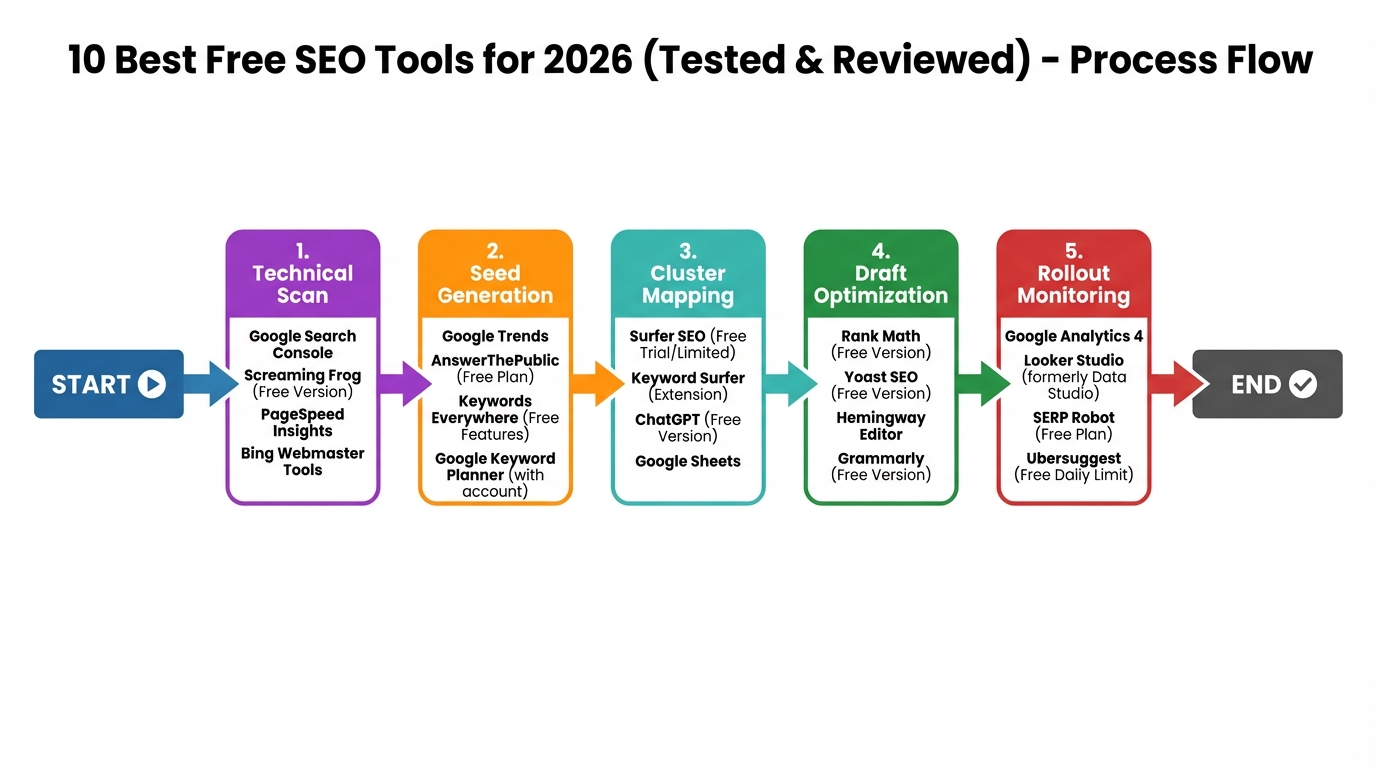
This specific sequence ensures you never hit a paywall midway through a critical task. You complete the technical checks in one platform, move seamlessly to another for research, and finalize the measurement in a third, maintaining constant momentum.
Free SEO Tool Capabilities and Limits
| Tool | Primary Use Case | Free Tier Limits | When to Upgrade |
|---|---|---|---|
| Google Search Console | Technical SEO & Indexing | Unlimited | N/A (Always Free) |
| Google Keyword Planner | Keyword volume estimation | Unlimited (shows broad ranges without spend) | Need exact search volumes rather than ranges |
| Ahrefs Free Tools | Initial keyword discovery | Limited daily queries (approx. 100) | Need full SERP analysis or complete keyword lists |
| Semrush (Free Account) | Domain & competitor analysis | 10 Analytics reports per day | Need historical data or higher query volume |
| RankDots (Trial) | SERP-based Keyword Clustering | Varies during initial trial period | Production-scale Topic → Page → Keyword Hierarchy execution |
AI search and visibility tools
When you try to cut corners on research time, you might ask an AI chatbot to generate a list of keywords with exact search volumes. The output looks incredibly detailed, complete with neat formatting and specific monthly metrics. You build an entire content pillar around those exact terms. Two months later, your traffic completely flatlines. The chatbot hallucinated the metrics, leading to a strategy built on entirely fabricated data.
AI chatbots are currently not recommended as primary keyword research tools compared to dedicated apps. Large language models predict the next logical word in a sequence; they do not query live, proprietary search databases. When you ask them for search volume or keyword difficulty, they confidently invent numbers that look plausible but have zero basis in reality. Shortcuts simply do not replace dedicated data platforms.
However, you still have to prepare for an AI-driven ecosystem. The definition of a search engine has expanded massively over the last year. Some industry surveys suggest roughly 40% of U.S. consumers now use TikTok as a search engine. Visual and short-form video platforms dictate top-of-funnel discovery just as heavily as traditional text-based interfaces. Recognizing this rapid shift, 68% of digital marketers have adopted AI-based SEO tools to manage expanded optimization scope. You are no longer just appeasing Google; you are structuring data for answer engine optimization to satisfy a multitude of generative engines, social algorithms, and emerging discovery platforms simultaneously.
How do search behavior shifts impact marketing workflows? They force a hard pivot from simple keyword placement to strict intent matching. AI search engines prioritize intent-matched answers over domains with high authority but poor relevance. This intent matching is impossible to gauge from the raw search volumes provided by basic free tools. A freemium generator might tell you a term gets 5,000 searches a month, but it will not tell you if the user wants to buy a software product, watch a tutorial video, or download a PDF template.
RankDots acts as a Keyword Search Intent Tool that automatically classifies the underlying search intent so you can format your content specifically to satisfy both Google and AI bots. Knowing the exact intent allows you to structure your headers, tables, and lists in a way that AI overviews can easily extract and cite.
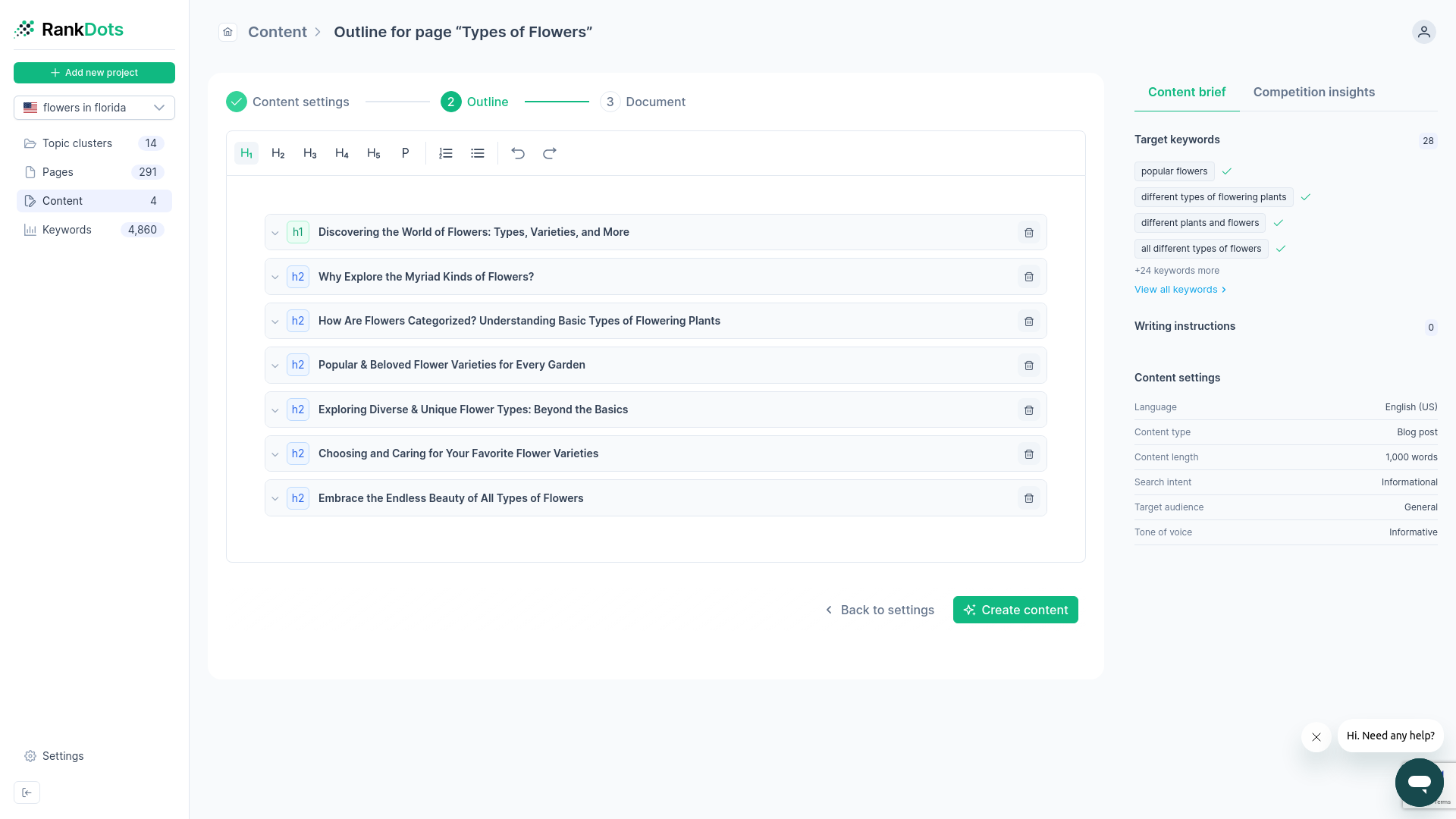
The Best Free SEO Tools for AI visibility are often the ones that help you structure your existing data rather than generate new keywords. Free schema markup generators allow you to wrap your content in JSON-LD, explicitly telling language models what your page is about without leaving room for interpretation. Extensions that simulate how a text-only crawler views your page help you strip away heavy JavaScript that often confuses AI parsers.
Furthermore, using native platform features costs nothing and provides highly accurate data. TikTok's native search bar auto-suggests highly relevant, long-tail queries that traditional SEO suites completely miss. YouTube's autocomplete provides similar insights into video-based search intent. By manually querying these platforms and structuring your written content to answer those exact visual queries, you capture traffic that bypasses standard text engines entirely. You build a resilient, zero-cost visibility framework that survives algorithm updates and interface shifts without relying on hallucinated chatbot metrics.
To improve AI search optimization on a budget, you must audit your existing top-performing pages. Run your highest-traffic URLs through a free rich results testing tool to verify that your FAQs and article schemas are validating perfectly. If an AI engine cannot easily parse your entity relationships, it will simply skip your site and source the answer from a competitor who took the time to implement proper markup. This dual focus on deep relevance and technical clarity protects your ongoing search visibility.
Keyword research and topic clustering tools
You sit down to map out a comprehensive topic cluster for your upcoming product launch. You plug a seed term into KWFinder, pull a handful of related variations, and try to dig deeper into the most promising long-tail query. Suddenly, a modal appears over your screen. You reach the daily limit. Strict freemium limits interrupt your workflow and prevent thorough keyword research exactly when you gain momentum.
Is it possible to do complete keyword research using only free tools? Yes, but it requires strategic rotation and a deep understanding of your platform limits. You cannot rely on a single interface to handle your entire workflow. You must chain different tools together to extract maximum data before hitting the daily cap.
You must understand these constraints before building your workflow. Ahrefs Keyword Generator generates 100 keyword ideas for free, making it ideal for broad, top-of-funnel brainstorming. Semrush relies on its database of 25.3 billion keywords, offering restricted queries and reporting on its basic tier. AnswerThePublic gives 3 free searches per day, which perfectly maps the specific informational questions users ask. KWFinder free plan limits you to 5 searches per day. Ubersuggest's limits are famously volatile. Some users report getting 3 keyword searches per day, while others are capped at just 1 search per day depending on the region and account age.
To get the most out of the Best Free SEO Tools, you must implement a strict three-day rotation strategy:
- Day 1 is for seed generation. Use Ahrefs to pull your 100 broad ideas and export the list to a spreadsheet. You do not need deep metrics at this stage; you just need the raw entities.
- Day 2 is for question mapping. Take your top three broad entities and plug them into AnswerThePublic. Export the visual webs of "how," "why," and "what" questions to form your H2 and H3 structures.
- Day 3 is for metric validation. Take the most critical, high-priority terms from your spreadsheet and run them through KWFinder or Ubersuggest to execute precise keyword difficulty analysis and verify exact search volume trends.
This rotation prevents you from burning premium searches on low-value brainstorming.
However, raw data generation introduces a new problem: keyword cannibalization. Free generators give you hundreds of terms, but they do not tell you which keywords can rank on the exact same page. If you create a separate article for "best CRM software" and "top CRM platforms," you will compete against yourself in the SERPs.
RankDots automates Keywords Clustering by analyzing actual Google search results overlap, instantly grouping keywords that share the same SERP. This prevents you from wasting time and resources building multiple pages when a single, comprehensive asset would perform significantly better.
When a direct competitor recently surges in rankings, you need to investigate their content and link-building strategy immediately. Deep competitor analysis and backlink checking usually require suites that cost over $130 a month. Semrush paid plans start at $139.95/month, while KWFinder paid plans start at $29.90/month. Ubersuggest paid plans start at $29/month. However, Semrush free plan includes up to 10 Analytics reports per day and 10 tracked keywords. You can pair this with the Neil Patel Backlink Checker, which lets you see 15 backlinks for free.
By carefully rotating through these precise limits and using automated SERP overlap analysis, you build a robust, enterprise-grade research engine without ever swiping a corporate card. You maintain total competitive awareness and scale your clusters systematically.
This approach completely removes the anxiety of sudden paywalls. Instead of feeling restricted by the freemium models, you leverage their specific strengths—using Ahrefs for raw volume, AnswerThePublic for intent, and Semrush for competitive intelligence. You transform disjointed platforms into a unified system that powers your entire content calendar.
Technical SEO and site audit tools
You just pushed the button to migrate the startup's blog to a new subdomain. Almost immediately, you wonder if the transition worked correctly. Are the internal links resolving correctly? Did the redirects fire? You suspect several critical links broke during the transfer, but without an enterprise cloud crawler, you feel completely blind. You need to diagnose the site immediately before Googlebot recrawls the disjointed architecture and drops your current organic visibility.
Technical errors reduce traffic more than any competitor's content push. When search engines hit a wall of broken pages, they simply stop indexing your site. Crawl budget is finite, and sending AI bots through endless redirect loops signals that your website is unmaintained and unreliable. You cannot afford to wait days for a cloud platform to run a scheduled scan. You need immediate, local auditing capabilities that put diagnostic data directly on your screen in minutes.
This is where the best free SEO tools completely level the playing field for solo marketers. The free version of Screaming Frog SEO Spider crawls up to 500 URLs per domain. For a mid-sized startup, 500 URLs perfectly covers an entire blog migration, a targeted topic cluster audit, or a routine check of your core conversion pages. You download the software to your machine, type in the target subfolder, and watch the crawler instantly map your site architecture.
Stop wasting time staring at overwhelming, unfiltered data exports. Focus your limited free crawl exclusively on three technical elements that actively destroy topical authority:
- Identify 404 client errors on high-value internal links. When you delete an outdated product page but forget to remove the links pointing to it from your main pillar pages, you bleed link equity. Sort the crawler export by "Status Code" to isolate 404s, then use the "Inlinks" tab to find exactly which active pages are linking to the dead URL.
- Locate missing or duplicated H1 tags. AI answer engines rely heavily on strict HTML structure to understand the primary entity of a page. If your H1 is missing—or worse, if your site template wraps the company logo in an H1 on every single page—language models will misinterpret your content's focus. Filter the crawler results by the "H1" tab to ensure every page has one unique, intent-matched heading and correctly configured html seo tags.
- Break continuous redirect chains. Redirecting a discontinued service page to a new offering makes sense. Redirecting Page A to Page B, which redirects to Page C, creates a chain that frustrates browsers and bots alike. Algorithms often abandon these chains after three hops, leaving the final destination unindexed. Map the exact path of your 301s and update the original internal links to point directly to the final destination URL.
Routine diagnostic checks prevent minor oversights from becoming massive traffic drops. By keeping Screaming Frog pinned to your taskbar, you transform technical SEO from an expensive, quarterly agency deliverable into a rapid, zero-cost weekly habit.
Analytics and performance tracking
Your CEO stops by your desk, points to last month's flat traffic graph, and asks point-blank what the marketing department actually achieved. If your only defense is a spreadsheet showing how many blog posts you published, you will lose that budget conversation. Activity is not the same thing as business impact. Tracking busywork, like tracking thousands of top-of-funnel keyword variations that never convert, creates the illusion of progress while actual revenue drops.
How do you measure outcomes rather than activity in SEO? You stop tracking vanity metrics and start measuring the specific pathways that generate revenue. Organic traffic is meaningless if it bounces immediately. Qualified demo requests, software trials, and sustained visibility on high-intent transactional queries represent actual ROI. You need granular visibility into these specific conversion drivers, but you do not need a massive enterprise suite to get it.
Semrush free plan includes up to 10 Analytics reports per day and 10 tracked keywords. Ten keywords sounds restrictive until you apply a topics-first methodology. You do not need to track 500 variations of a single query. You only need to track the 10 most critical, bottom-of-funnel pillar pages that directly influence your startup's revenue. By assigning your 10 free daily slots exclusively to these high-stakes entities, you gain premium daily tracking capabilities on the exact terms your CEO actually cares about.
How long does it take to see SEO results using free tools? Leveraging a zero-cost stack does not change the standard organic timeline. Content still takes three to six months to mature, earn trust, and climb the SERPs. The tools simply change your operational cost basis. A $200-a-month tracking platform will not make Google index your site any faster than a free dashboard will.
To build a complete, zero-cost measurement ecosystem, combine the hyper-focused precision of Semrush with the broad visibility of native search console data.
| Measurement Goal | Tool Selection | Implementation Strategy |
|---|---|---|
| Macro-level indexation | Google Search Console | Monitor the "Pages" report weekly to ensure Google actually serves your new cluster in the index. Look for "Crawled - currently not indexed" errors. |
| Micro-level rank tracking | Semrush (Free Tier) | Lock in your top 10 revenue-driving pillar keywords. Check daily to monitor exact positioning against primary competitors. |
| Conversion mapping | Google Analytics 4 | Build a custom exploration tracking organic entrances directly to your "Book a Demo" or specific checkout events. |
This specific combination provides total visibility from the moment a crawler hits your site to the moment a user submits a lead form. You track the exact queries that matter in Semrush, verify the technical delivery in Search Console, and prove the financial outcome in Analytics. When leadership questions your strategy, you no longer show them a list of published links. You show them a validated dashboard proving exactly how your targeted best free SEO tools drove qualified buyers to the checkout page.
On-page optimization tools
Writing new content is only half the battle; preventing severe traffic drops across your existing assets keeps your baseline stable. For example, if an optimization platform like Clearscope alerts you that your article lost roughly 70% of its traffic, it signals a severe drop in topical relevance. When competitors publish aggressively, the semantic expectations for a topic shift. If your two-year-old guide on software deployment lacks a section on cloud orchestration, search engines will demote it for failing to satisfy current user intent.
To maintain rankings, you must constantly grade your content against top-ranking competitors. Premium optimization platforms use TF-IDF (Term Frequency-Inverse Document Frequency) analysis to determine exactly which semantic entities appear frequently across the top ten search results. If the top five articles about "CRM migration" all heavily discuss "data mapping" and "API rate limits," engines expect your page to cover those entities as well. Failing to include them signals that your content is shallow.
Google ranks websites based on content quality, search intent, page experience, and trust, not on tool pricing. You do not need to spend hundreds of dollars a month to reverse-engineer semantic intent. You can execute a highly accurate, zero-cost workaround before hitting publish by manually acting as the content grader.
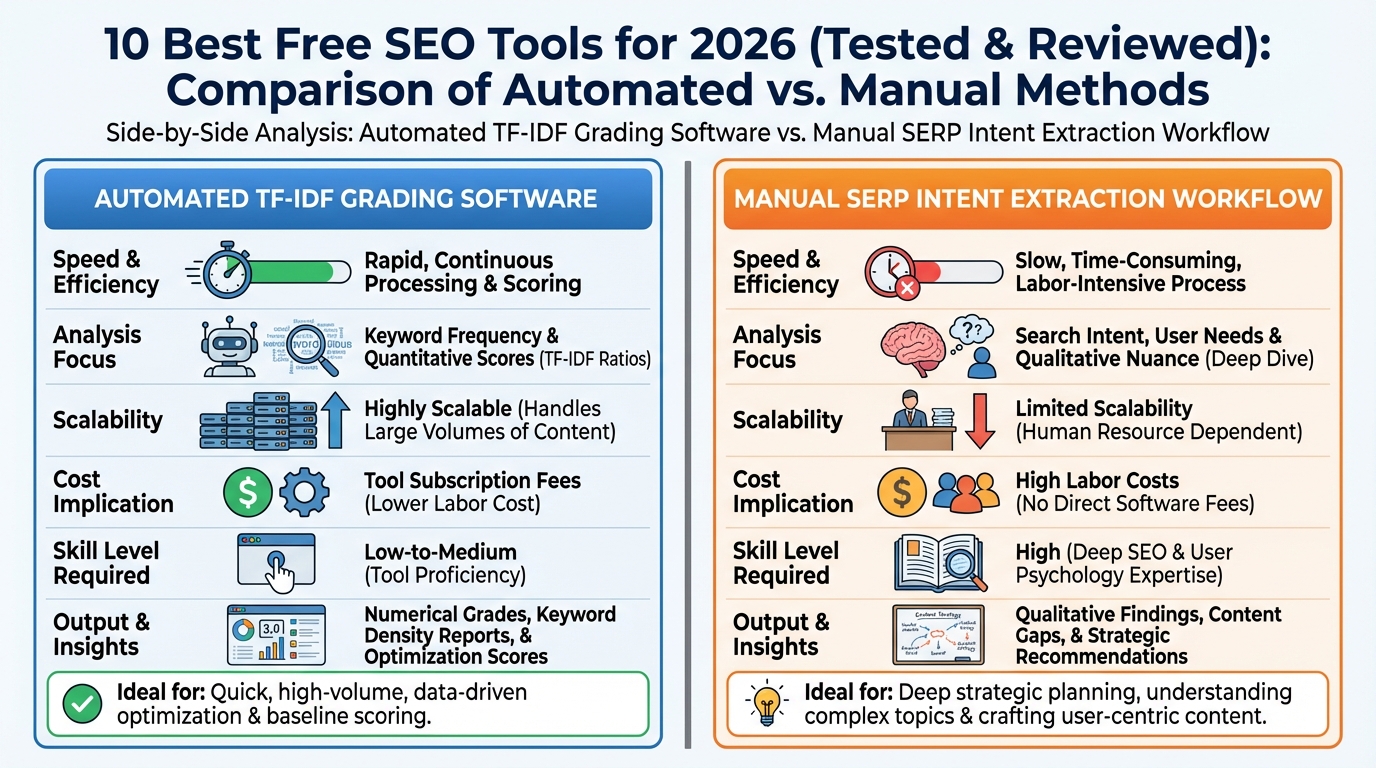
Execute this manual optimization sequence to safeguard your traffic:
- Open an incognito browser and search your primary target keyword.
- Open the top three ranking organic results in separate tabs.
- Extract their H2 and H3 subheadings into a blank document to map the exact semantic entities they prioritize.
- Run a "Ctrl+F" search on those competitor pages for industry-specific jargon to see which technical terms appear repeatedly.
- Review your own draft and naturally weave in the missing concepts—do not just paste the keywords, build actual paragraphs explaining the missing sub-topics.
By using the live search results as your primary reference point, you ensure your draft aligns perfectly with current algorithmic expectations. The best free SEO tools are often just the search engine result pages themselves. When you manually verify on-page elements, you inherently build a deeper understanding of your audience's pain points. This manual entity mapping prevents keyword stuffing and ensures your content remains comprehensive enough to survive rapid AI search shifts without relying on expensive third-party grading software.
Backlink and off-page SEO tools
A direct competitor just surged in the rankings, overtaking your main product page seemingly overnight. You immediately need to investigate their off-page strategy. Did they launch a massive digital PR campaign? Are they buying links from private networks? Competitive urgency demands action, but your software budget remains frozen. You stare at the search results, knowing the data you need is hidden behind massive paywalls.
Off-page analysis is notoriously the hardest category to execute on a strict budget. Scraping, storing, and indexing billions of live links requires massive server infrastructure. Comprehensive backlink databases are incredibly expensive to maintain, which is why Semrush paid plans start at $139.95/month. For a solo marketer trying to execute a surgical outreach campaign, these enterprise price tags act as a massive barrier to entry.
Fortunately, you do not need to download a competitor's entire historical link profile of 50,000 spam directory placements. You only need to identify their highest-impact, needle-moving placements. Neil Patel Backlink Checker lets you see 15 backlinks for free. Fifteen high-authority referring domains provide more than enough strategic intelligence to decode their entire off-page playbook.
Use this constrained data to perform a manual keyword gap finder and targeted link gap analysis without spending a dime. When you input your rival's URL into the free checker, sort the 15 visible results by domain authority. Look specifically for patterns in the referring domains.
Analyze the data to identify exactly how they acquired those top placements:
- Are the links coming from industry podcast show notes? This tells you their leadership team is executing a podcast tour, and you should immediately pitch your own CEO to those exact same hosts.
- Do the referring domains belong to complementary software companies? They are likely engaging in strategic partnership marketing and guest post swaps. You can replicate this by identifying non-competing tools in your own tech stack and offering to co-author a study.
- Are the links embedded in digital PR roundups or journalist resource pages? You now have a targeted list of specific journalists who actively cover your niche.
The best free SEO tools force you to be deeply strategic with limited data. Instead of drowning in massive spreadsheet exports of toxic links, you focus exclusively on the 15 relationships that actually moved the needle. You extract the strategic intent behind the competitor's campaign and map it directly to your own zero-cost outreach strategy.
Local SEO tools
Can free SEO tools help local businesses and service websites? Absolutely. Proximity and local prominence do not require expensive enterprise software suites to manage. In fact, local search algorithms operate on an entirely different set of signals than traditional organic rankings, relying heavily on geographic relevance, review velocity, and precise entity categorization.
The absolute core of any local visibility campaign relies on zero-cost properties, prioritizing Google Business Profiles above all else. This free dashboard is essentially your new homepage for localized queries. You must claim this property and optimize every available field. Upload high-resolution photos of your storefront or service trucks weekly, populate the Q&A section with exact-match questions from your customers, and use the native "Updates" feature to broadcast your latest topic clusters directly into the local map pack.
Once your profile is fully optimized, you must measure your geographic visibility. Ranking number one when searching from your own office is meaningless if your business drops to the tenth position just three miles away in a neighboring zip code.
Free grid tracking extensions solve this proximity problem natively in your browser. By installing a free local rank checker extension, you can simulate search requests from specific GPS coordinates. The tool maps your exact ranking position across a visual grid covering your entire service area.
If the grid shows strong visibility in the north but severe drop-offs in the south, you immediately know where to focus your efforts. You can adjust your strategy by publishing localized case studies or acquiring neighborhood-specific backlinks from the exact areas where the grid shows weakness. Mastering these native, free local utilities gives you total control over your geographic footprint.
Free vs. Paid SEO Tools
Pros
- Zero financial risk allows beginners to build a foundational understanding of search intent and entity-driven content before scaling.
- Forces a strict topics-first methodology instead of relying on expensive software suites to mask a disorganized strategy.
- Provides a clear upgrade path to entry-level paid tools like Ubersuggest or KWFinder once a site hits early revenue milestones.
Cons
- Creates significant workflow friction by requiring marketers to juggle multiple freemium logins and constantly navigate daily usage limits.
- Lacks automated capabilities like SERP-based Keyword Clustering, forcing manual spreadsheet management to maintain a proper topic hierarchy.
- Delays access to unified Competitor Content Analysis, which becomes a major operational bottleneck once a website starts generating consistent daily traffic.
Frequently asked questions
What are the best free SEO tools and why are they important for beginners?
Can a website rank on Google using only free SEO tools?
Which free SEO tool is the most powerful and why?
Are free SEO tools as effective as paid ones, or should they be avoided?
Can free SEO tools help generate income from blogging?
Are free SEO tools enough for long-term SEO success?
Can I do SEO myself for free?
Conclusion and final thoughts
Consistency and a strict topics-first methodology matter significantly more than the monthly cost of your software stack. A marketer with a clear understanding of search intent, armed only with free utilities, will routinely outperform a disorganized team paying thousands for enterprise data they never properly implement. The shift toward AI answer engines demands structured, entity-driven content—a requirement that strategic workflows solve, not credit cards.
The best free SEO tools are already available, waiting to be chained together into a cohesive system. You do not need to wait for budget approval to start capturing search traffic. Take action today. Download Screaming Frog to lock down your technical foundation, claim your 10 free tracking slots in Semrush, and use Ahrefs' free generator to pull your first batch of core entities. Assemble your top three zero-cost tools right now and start mapping your very first topic cluster.
Upgrade from fragmented free tools to a unified topics workflow
With traditional search engine volume predicted to drop 25% by the end of 2026, relying on disjointed freemium keyword lists leaves critical gaps in your strategy. RankDots enforces a strict Topic → Page → Keyword Hierarchy, allowing you to map complete clusters, detect exact search intent, and structure your content for AI answer engines in a single platform.