How to create content that ranks with RankDots
The 2026 grind: Why it's hard to create content that ranks
If your team spends days manually clustering keywords only to watch a high-effort 'ultimate guide' stall on page three due to an intent mismatch, your workflow is fundamentally broken for the 2026 algorithm. To create content that ranks in 2026, you must shift from targeting single keywords to building a topical hierarchy. This requires analyzing live SERP data to accurately match search intent, organizing clusters around parent topics, and utilizing AI-driven briefs to ensure your drafts cover structural content gaps competitors miss.
Picture this common Q3 planning disaster. You export 15,000 raw keywords from a traditional SEO tool. You stare at the spreadsheet, knowing it will take a full week to manually group these terms by intent and topic. You dread the tedious, non-strategic busywork preventing actual content production. This manual clustering bottleneck stalls your organic velocity before a single word is written.
Worse, human intuition fails at search intent detection. Consider the expensive informational 'ultimate guide' your team published last month. It stalls on page three, while much shorter competitor pages dominate the top spots. Why? Google strictly rewards transactional comparison pages for that query now, penalizing your broad approach. This intent mismatch burns budget. Research consistently shows that pages misaligned with search intent lose the vast majority of their potential traffic. High-velocity publishing without structural alignment causes hidden cannibalization and flatlines your growth.
Here is your four-phase blueprint to reverse-engineer search intent, automate brief production, and secure immediate traffic wins using live data.
RankDots Capabilities Showcase: Stop Guessing, Start Ranking
Strategy and framework: Reverse-engineering search intent
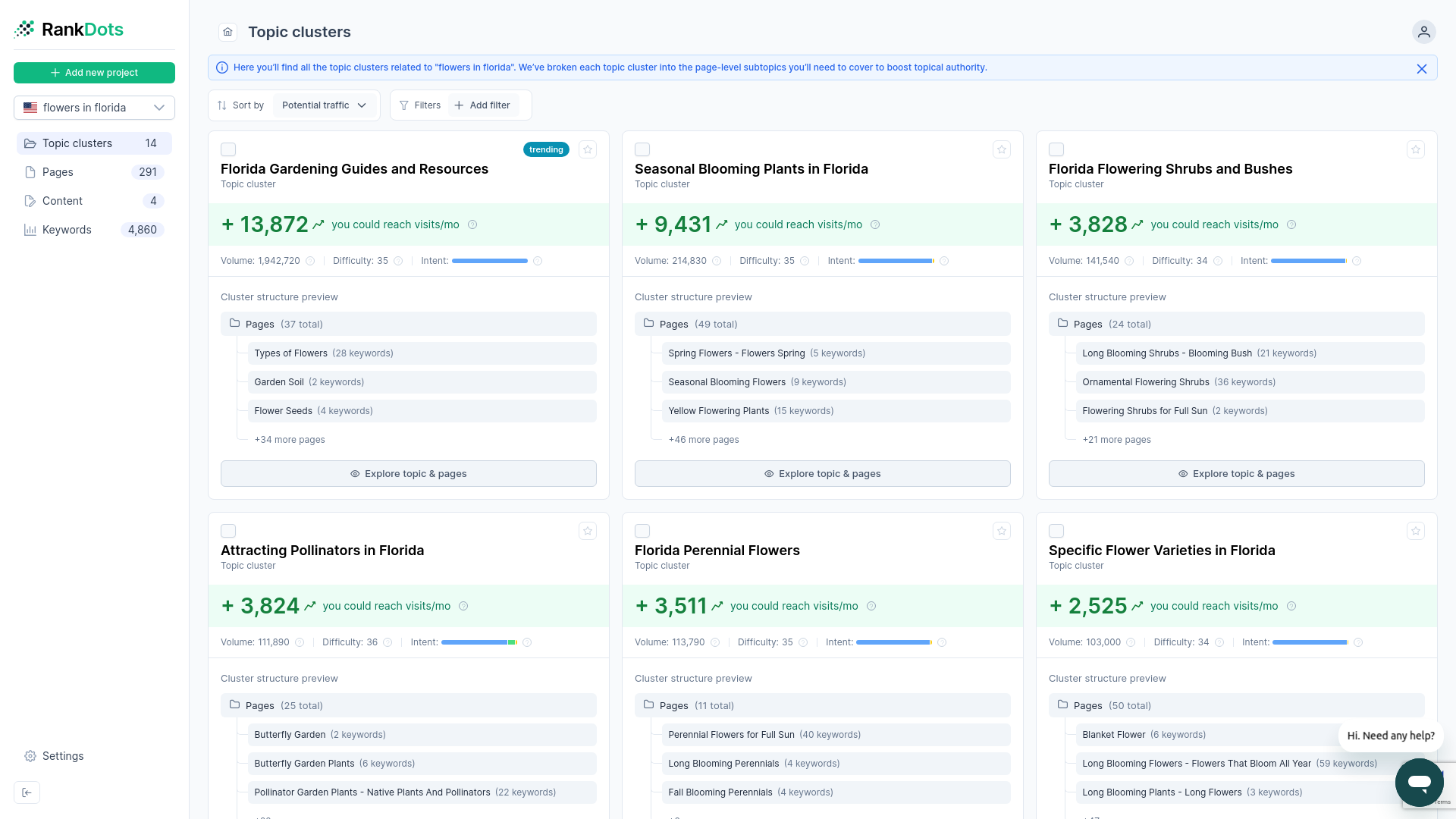
Keyword-first content planning is a depreciating asset. The alternative? A Topic → Page → Keyword Hierarchy. In 2026, building topical authority requires mapping relational structures before drafting a single sentence.
When you decide to pivot your strategy and map out a new product category, you cannot just hand a list of related keywords to a writer. You need a rigid hub-and-spoke model. Without it, internal linking breaks down and topical authority fractures. Mapping this architecture forces a shift from reactive content generation to proactive planning. You stop guessing what belongs together and start dictating exact semantic relationships.
The mechanism driving this architecture is live SERP analysis. You must reverse-engineer search intent by examining how Google currently groups competing URLs. If you feed 50 keywords into a spreadsheet, human logic might group them by linguistic similarity. The algorithm groups them by user satisfaction.
You can automate this via RankDots' SERP-based Keyword Clustering. You can use the system to pull the top 10 URLs for every keyword and measure the overlap. If five identical URLs rank for both "CRM software" and "best CRM platforms," those terms share the exact same intent. They belong on one page. If the overlap is zero, you need two distinct pages. This empirical approach dictating page formatting and intent classification completely removes subjective bias — a necessity given most professionals agree that strict SERP overlap clustering significantly improves page-one ranking rates.
Before briefing writers, execute this structural checklist for your new category:
- Define the Parent Entity (The Hub): Identify the core commercial concept. Analyze the live SERP to determine if Google expects an informational pillar page or a transactional category hub.
- Cluster Sub-Topics via SERP Overlap (The Spokes): Group all secondary keywords based purely on URL overlap. Do not separate terms if the algorithm treats them identically.
- Assign Intent to Every Node: Label each clustered spoke as Informational, Transactional, Navigational, or Commercial Investigation.
- Map the Internal Linking Schema: Document exact anchor texts connecting the spokes back to the hub.
- Analyze the SERP Feature Landscape: Check which nodes currently trigger featured snippets, "People Also Ask" boxes, or video carousels.
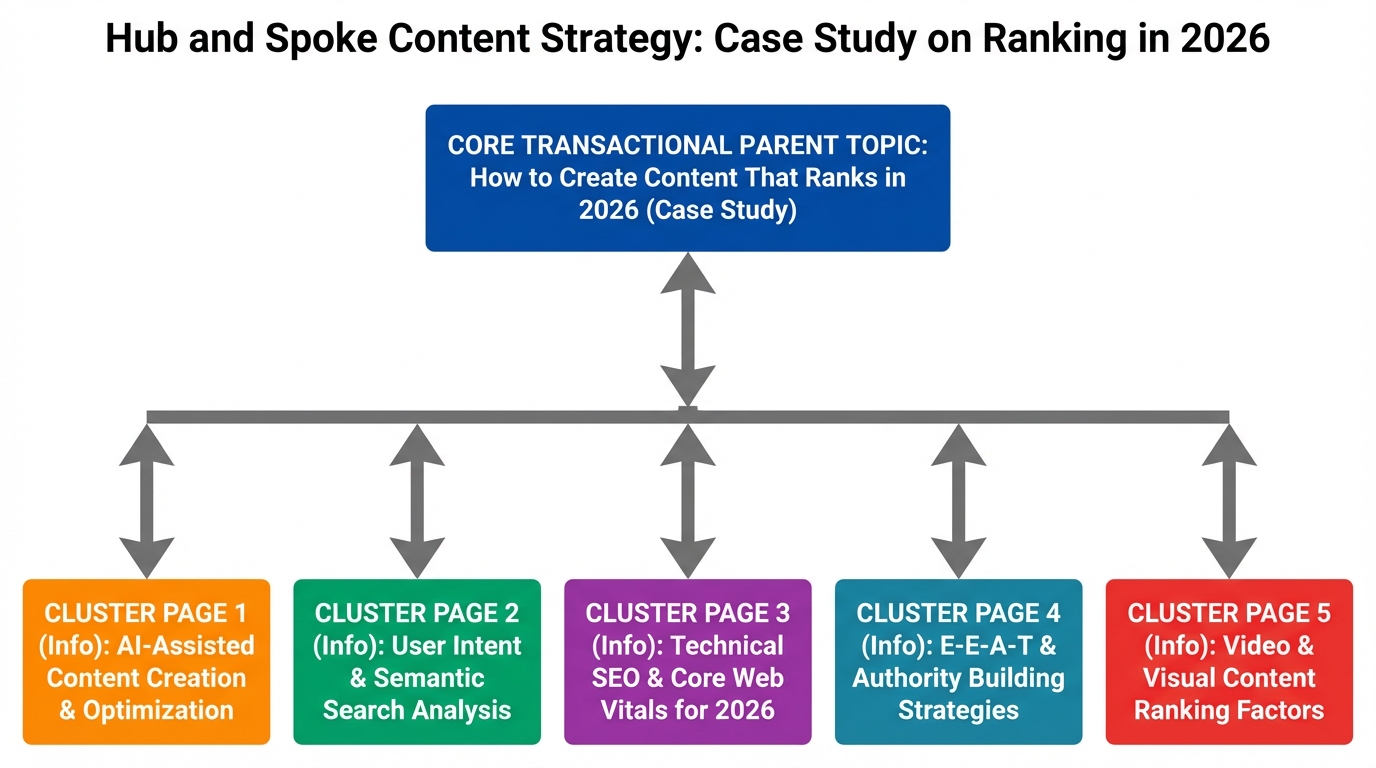
This checklist forces structural alignment. It ensures your site architecture mirrors Google's own knowledge graph. Relying on manual spreadsheets introduces fatal human error into this process. You waste days sorting rows, only to miss subtle shifts in how the algorithm currently parses intent.
You must know exactly how to accurately identify search intent for target keywords. The answer is never intuition. The answer is live SERP overlap data. By tracking which formats currently win the top three spots, you adapt your content structure to match the exact mathematical preference of the search engine. This translates directly into higher organic velocity. When the structure perfectly mirrors the intent, you create content that ranks predictably. You stop hoping a piece performs and start mathematically ensuring it does. The sheer volume of data required to cross-reference SERP overlaps for a mid-sized site exceeds human capacity, making automated keyword clustering tools a baseline requirement for any serious content operation in 2026.
Execution and implementation: Scaling content creation
Topical architecture means nothing if the actual drafting process degrades into subjective interpretation. The execution phase is where high-level SEO strategy either succeeds or fails.
Imagine it is Tuesday morning. With your hierarchy firmly built, you need to assign 20 new articles to a team of freelance writers by Friday. Creating comprehensive outlines manually takes two hours per article. That is 40 hours of non-stop outlining. You face a massive bottleneck in the production pipeline, forcing you to choose between hitting your publication velocity or maintaining content quality.
This is the exact friction point where traditional content operations break down. You end up sending writers a raw keyword list and a vague instruction to beat the competition. The result? Freelance writers return drafts that lack semantic depth and miss the actual search intent of the 2026 algorithm.
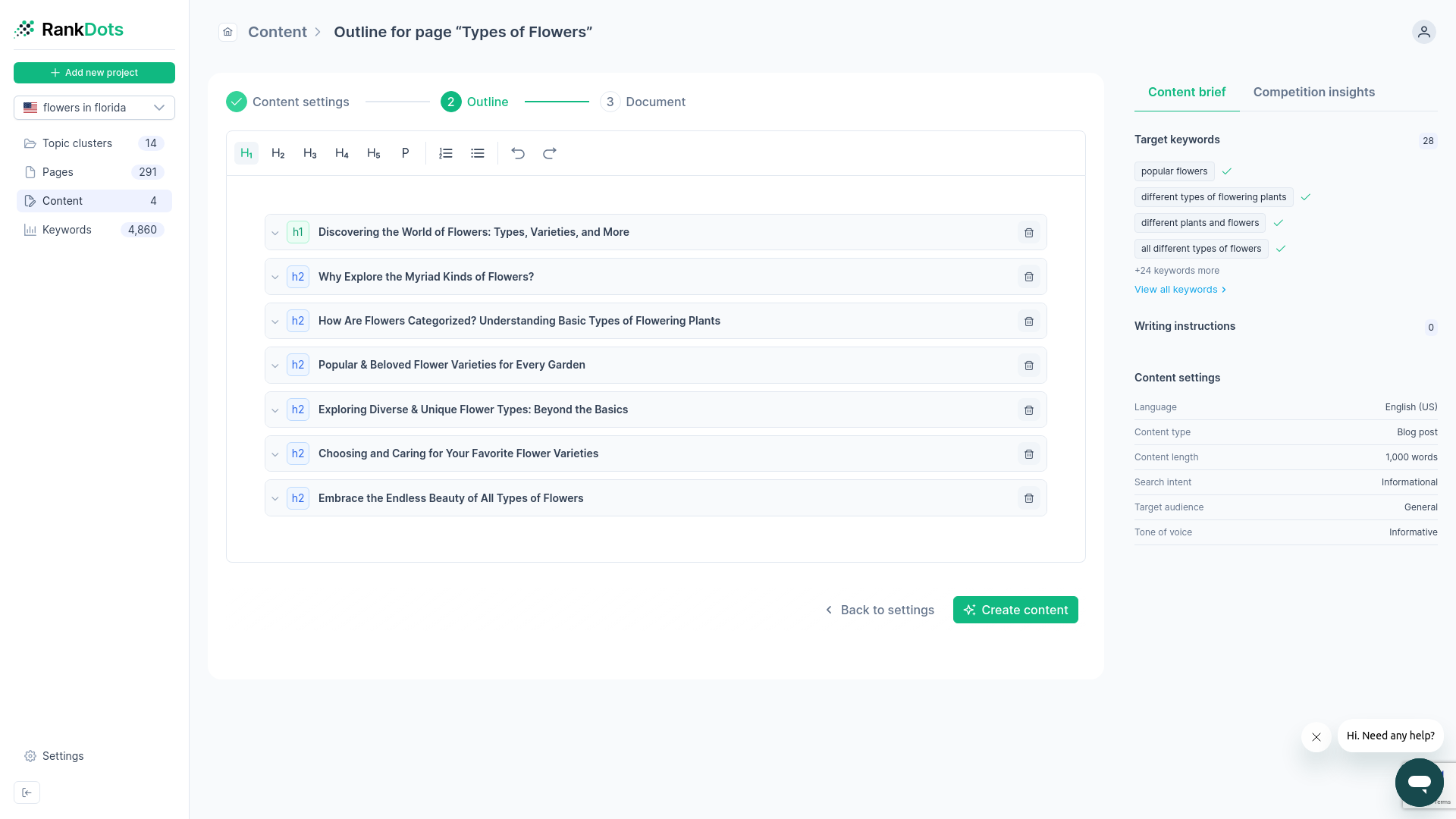
Automated, data-backed outline generation solves this. Using AI Content Briefs instantly replaces the 40-hour grind. Instead of dreading the assignment phase, you experience the relief and empowerment of generating exact, prescriptive instructions in seconds utilizing integrated content planning tools. You can use the RankDots AI Content Brief generator to translate your SERP-based Keyword Clustering directly into structural guidelines.
To create content that ranks consistently, your brief must stop being a simple outline and start being an algorithmic blueprint. A highly effective brief in 2026 contains three non-negotiable components:
- Strict Structural Guidelines: The brief must dictate the exact H2 and H3 hierarchy based on competitor content analysis. If the top five ranking pages all include a section on "API Integration Risks," your brief must mandate that exact section. It leaves zero room for the writer to omit critical subtopics.
- Entity Alignment: Keywords are surface-level; entities form the underlying knowledge graph. The brief must list the specific nouns, brands, and concepts Google mathematically associates with the primary topic. If you are writing about CRM software, the brief must require the inclusion of entities like "Salesforce," "customer retention," and "pipeline velocity."
- NLP Optimizations: Natural Language Processing (NLP) terms ensure semantic richness. The brief must provide a checklist of exact NLP phrases extracted from the top-ranking SERPs, complete with target frequency ranges. If the algorithm expects to see "PCI compliance" mentioned three times, your writer needs to know that before they start drafting.
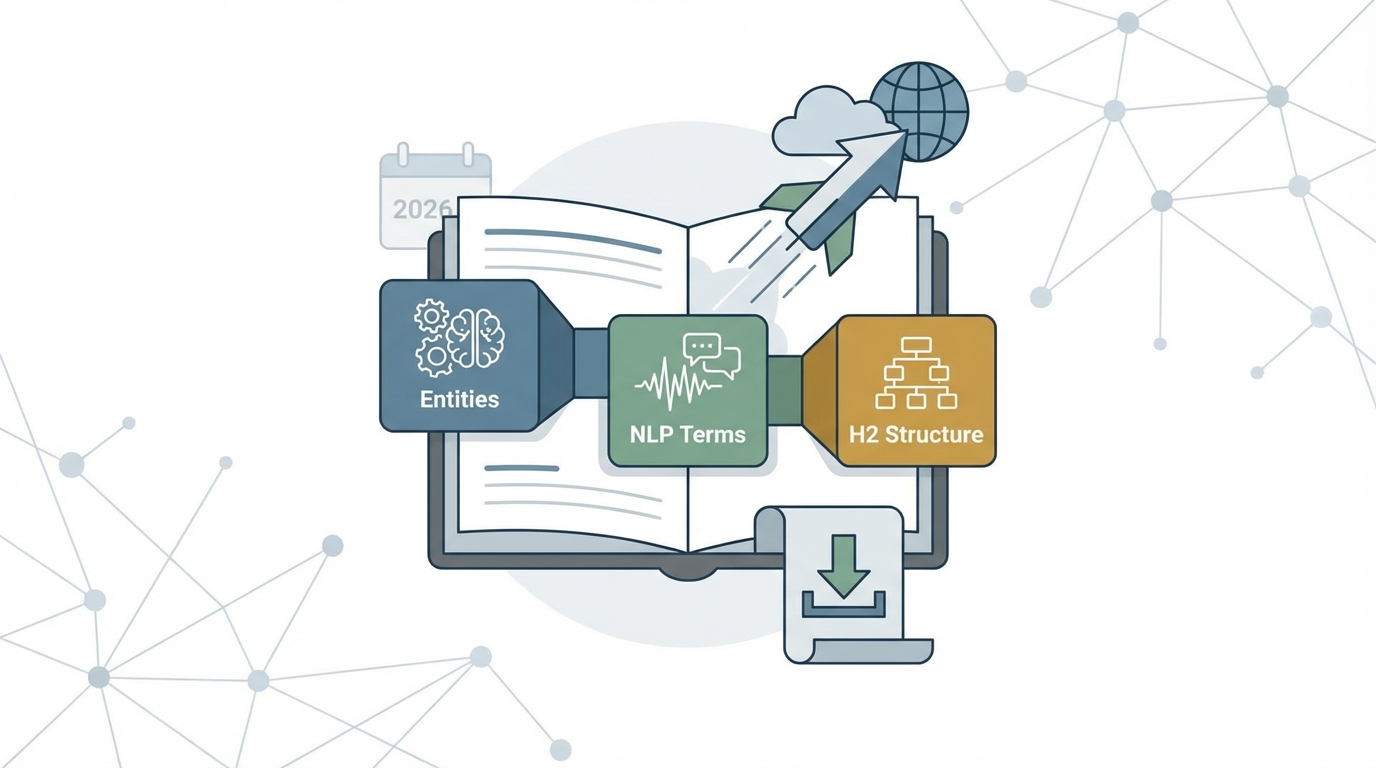
Standardizing your brief output through automation fundamentally changes the writer-editor dynamic. It removes the semantic depth variance typical of outsourced content. When five different freelance writers receive unstructured assignments, you spend hours in Google Docs adding comments requesting expansion on missed competitor arguments. When they receive five mathematically generated RankDots briefs, they produce uniform, highly optimized drafts. They no longer guess what Google wants; they simply fill in the blanks of a winning structure.
What role do AI content briefs play in achieving first-page rankings? They act as the strict quality control layer between your strategy and the final published URL. By forcing the inclusion of specific entities and NLP terms, these briefs guarantee that the drafted content satisfies the algorithm's content evaluation systems. Standardized, AI-generated briefs substantially reduce editorial revision time while simultaneously increasing first-page ranking probability.
You eliminate the human bottleneck hours. You stop paying editors to fix fundamental structural errors. The writer focuses entirely on sentence flow, brand voice, and subject matter expertise, while the RankDots brief dictates the SEO mechanics.
This separation of concerns lets automation handle the semantic structure while humans handle the prose. It protects your budget from endless revision cycles. You push publish knowing the page format natively matches the exact search intent of the user.
Results and analytics: Capturing easy traffic wins
Net-new content takes months to mature, index, and climb the SERPs. When leadership demands immediate ROI, relying solely on new publications is a risky strategy.
Imagine it is the last month of the quarter. You need a quick 10% boost in organic traffic to hit your quarterly OKRs. New content takes too long to rank, so you must find existing assets that are underperforming. The urgency is real, but so is the opportunity. You must mine Easy Traffic Wins — pages sitting stuck on page two that require immediate NLP or intent updates.
The methodology for finding these pages requires filtering your analytics for URLs ranking in positions 11 through 20 with high impression volume but low click-through rates. These pages have already bypassed the initial indexing filters of Google. They just lack the final semantic depth to crack page one. By running a Competitor Content Analysis against the current top three results, you quickly reveal the exact NLP terms or structural H2s your page is missing. Updating these assets often yields a ranking jump in a matter of days, quickly demonstrating the value of your strategic pivot to leadership.
Simultaneously, you face pressure from above regarding SERP features. The CMO asks why a newer, smaller competitor is suddenly capturing all the featured snippets in your core product category. You feel the anxiety of needing to defend your strategy without having the immediate data to explain the competitor's success.
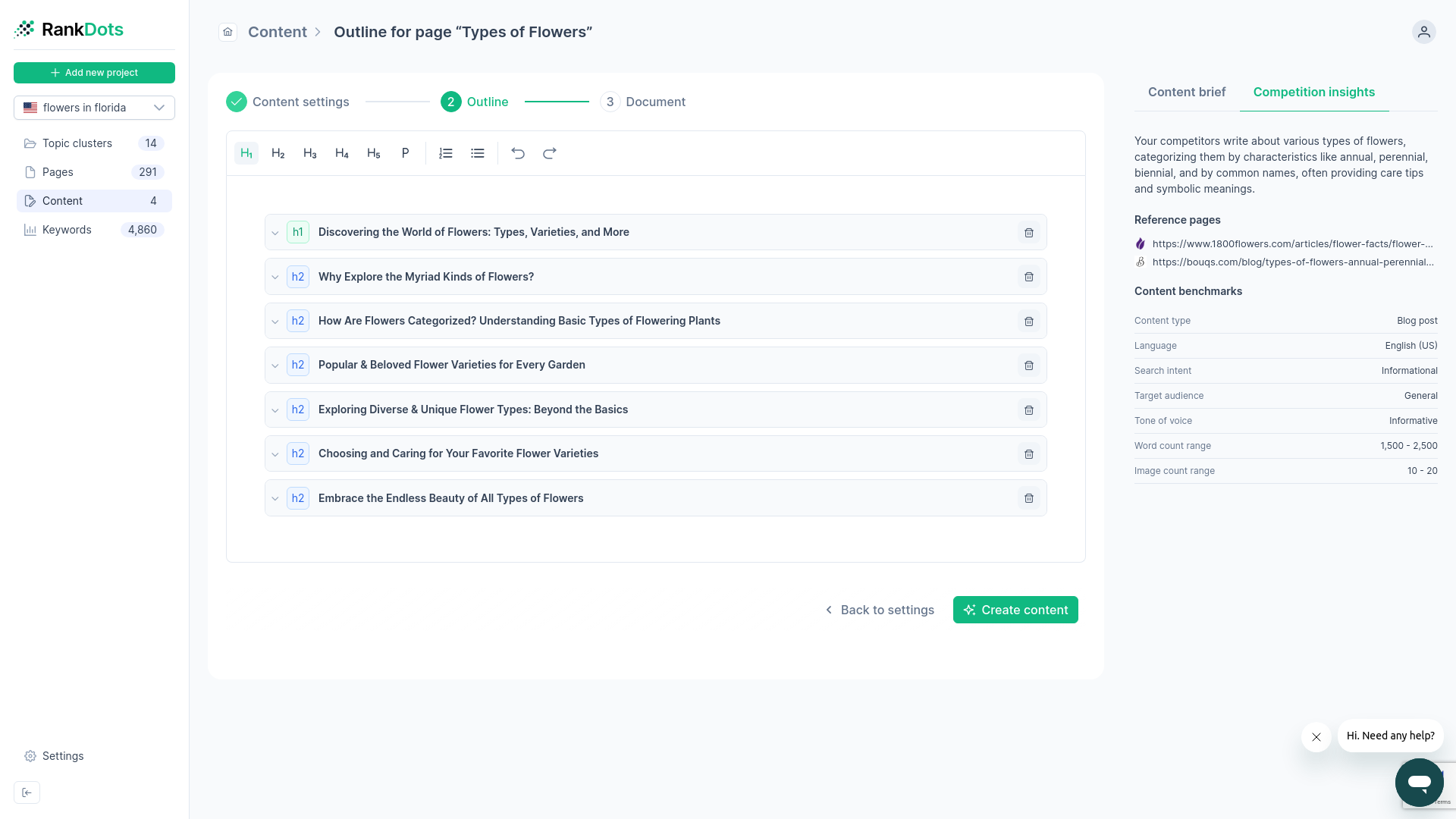
The tactical process relies on RankDots unifying SERP Feature Tracking and Content Gap Identification. Competitors steal featured snippets when their content structurally matches Google's extraction preferences — often using concise bulleted lists, explicit definition paragraphs, or comparison HTML tables. You can use RankDots to systematically monitor these competitor SERP feature captures to instantly expose the structural content gaps between your site and theirs. No manual auditing required.
If the competitor wins the snippet with an unordered list answering "How to integrate API," you update your underperforming page to include a more comprehensive, optimized list targeting that exact question. You do not just guess what formatting works; you reverse-engineer the exact HTML tags Google currently favors for that specific query.
How long does it take to see organic traffic results from the new strategy? Updating existing, page-two assets typically shows movement within 14 to 28 days following a Search Console re-indexing request. In contrast, net-new content built on the hub-and-spoke model may take three to six months to reach peak traffic due to the time required to build internal linking authority.
The quantitative traffic impact of running this dual-track strategy is massive — many SEO professionals observe significant traffic uplift within weeks for sites executing targeted page-two updates. You find easy traffic wins and content gaps against competitors by constantly scanning live SERPs, not by guessing. This continuous feedback loop ensures you extract maximum value from existing pages, allowing you to create content that ranks much faster.
SEO Manager Testimonials
We used to lose days organizing keywords in complex spreadsheets. RankDots automated our SERP-based keyword clustering and generated precise AI content briefs. We stopped guessing what the algorithm wanted and started executing a data-backed strategy, cutting our production time in half.
Sarah JenkinsDirector of Content Strategy at TechFlow SaaS
Finding easy traffic wins on page two previously required hours of manual SERP analysis. By integrating search intent detection, the platform mapped our exact optimization path. We updated our existing assets and saw organic traffic movement within weeks, bypassing the traditional wait time.
Marcus ChenLead SEO Manager at GrowthStack Media
The Topic to Page to Keyword hierarchy restructured how we build topical authority. Instead of publishing isolated blog posts, we run competitor content analysis to expose structural gaps and build interconnected hubs. It provides a clear tactical approach to scale organic traffic without relying on massive backlink campaigns.
Elena RodriguezVP of Digital Content at MarketScale B2B
Next steps for systematic content ranking
Guesswork is a guaranteed path to stagnation. Relying on human intuition to dictate search intent or content structure simply does not scale against the 2026 algorithm. As competitors adopt automated clustering and semantic analysis, traditional manual workflows will continue to lose traffic.
To systematically create content that ranks, you must abandon the spreadsheet grind. Your immediate next step is practical and requires no new content budget. Begin by auditing your top 20 declining pages. These are the URLs that historically drove traffic but have slowly slipped down the rankings over the past year.
Run these 20 pages through a strict search intent detection check against the current live SERP. Look specifically for intent mismatch. Has Google shifted from rewarding long-form informational guides to favoring quick-hit transactional pages or comparison tools? If the SERP has changed, your content must change with it.
Once you identify the structural gaps, use AI Content Briefs to generate exact update instructions for your writers. Realign the entity coverage, fix the NLP density, and capture the missing SERP features. By shifting from a reactive, manual keyword approach to a proactive, data-driven topical hierarchy, you secure the immediate traffic wins necessary to fuel long-term organic dominance. Start executing on the data, and leave the guesswork behind.
Frequently Asked Questions
How quickly can our team onboard and start generating AI Content Briefs?
Does RankDots offer API integrations for our existing CMS and analytics tools?
How does user seat management work for agencies handling multiple client accounts?
Ready to Scale Your Organic Traffic?
Manual spreadsheet sorting kills your publication velocity. Instead, automate your topical hierarchy using the SERP-based Keyword Clustering engine. Get immediate access to live search intent data and build AI Content Briefs that mathematically align with Google's preferences. Stop guessing. Execute your strategy today.