10 best seo tools
The best SEO tools for marketers in 2026
You know organic search has massive traffic potential, but selecting the best SEO tools for your software stack often leads straight to analysis paralysis. With well over 450 platforms currently on the market, filtering the essential applications from expensive distractions is a full-time job. Staring down hundreds of feature matrices leaves many content marketers guessing which applications actually drive revenue. You might find yourself stuck comparing dozens of trial accounts, unsure if you are missing a critical capability.
With these optimization applications, you can simplify keyword research and technical audits to directly increase your organic traffic. Top all-in-one paid options include platforms like Ahrefs and Semrush, while Rankdots excels for AI-driven content strategy. Essential free tools include Google Search Console and Google Analytics for foundational performance tracking. Without a clear plan, you risk overspending on redundant utilities or defaulting to native dashboards that lack competitor data.
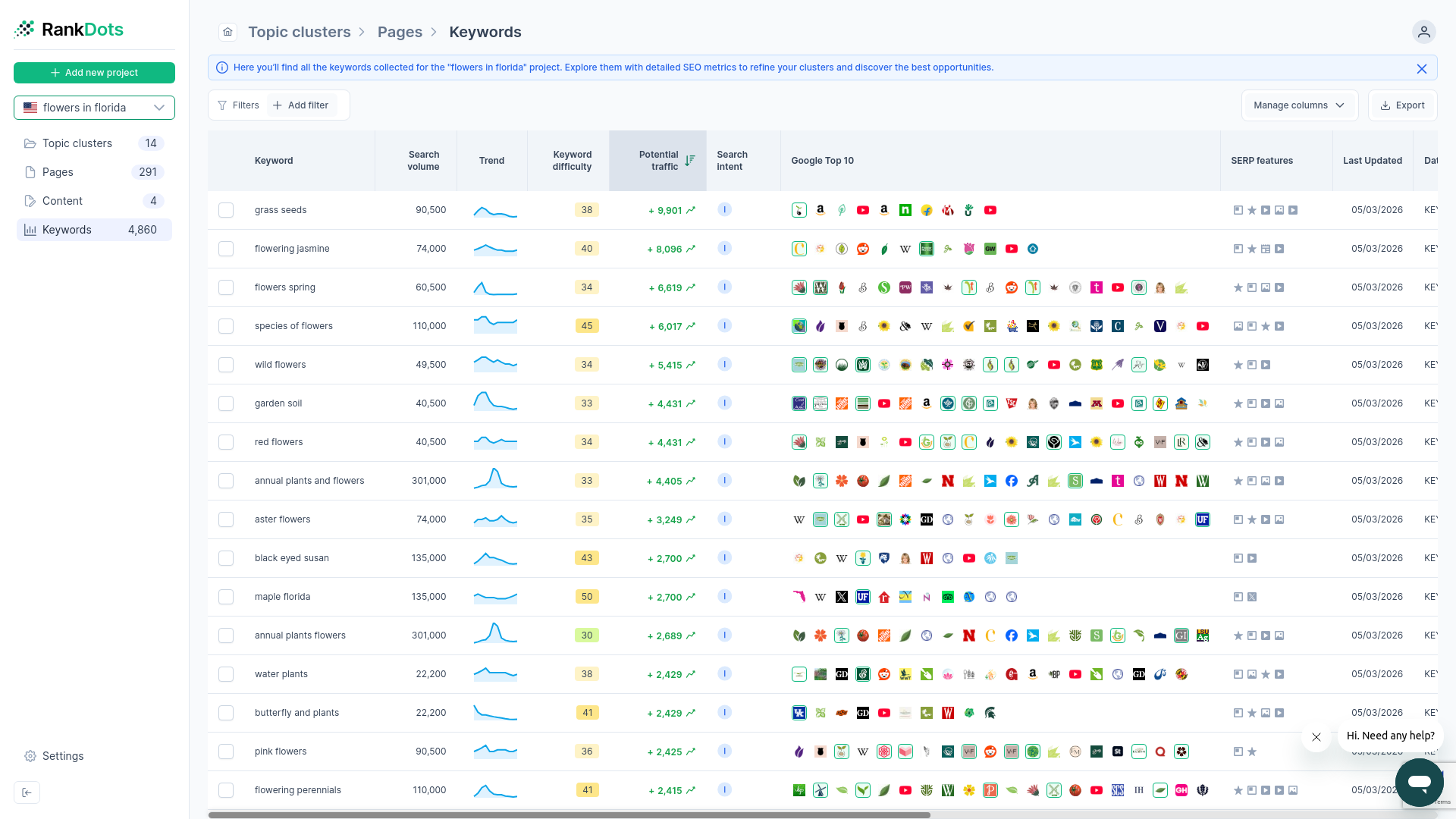
Investing time in search optimization remains highly profitable. BrightEdge data confirms that organic search drives over 53% of all trackable website traffic. Capturing that demand requires moving past legacy data scrapers that simply dump unformatted keyword lists into spreadsheets. Modern optimization platforms are workflow assistants that help you interpret search intent and map technical site architecture directly to revenue outcomes. This guide provides a complete framework for evaluating and selecting the exact software you need, including a curated review of the top options for your budget. If you are just getting started, explore our comprehensive guide on the best free SEO tools.
How to choose the right software for your stack
Deciding you need a comprehensive optimization suite is easy, but looking at the checkout page often causes immediate hesitation. When industry leaders charge $129 to $139 per month for their standard tiers, budget anxiety sets in quickly. You need advanced capabilities to scale your traffic, yet justifying that recurring expense without guaranteed return is difficult for any small business. The reality is that organic marketers cannot do their jobs effectively without the right applications to scale efforts and match competitors.
A strict three-point framework helps prevent bloated software expenses during evaluation.
Data accuracy
Prioritize reliable index size over raw feature count. No platform has perfect click-stream data, but your chosen suite must provide a statistically significant sample for your specific geographic market. Verify their backlink crawler frequency before committing.
Workflow integration
A platform should reduce manual tasks, not add friction. If you have to constantly export CSV files from an application just to format a basic content brief, it drains team resources. Look for native connections with your CMS or project management software.
Budget alignment
Map specific features directly to planned marketing activities. If you only publish two articles a month, paying a premium for a daily rank tracker updating 5,000 keywords wastes your budget completely.
Baseline pricing for professional entry-level tiers varies significantly across the market. While some historical reporting indicates Moz Pro pricing starts from $49 per month, this often represents a restricted entry tier. Standard comprehensive plans typically hover between $99 and $139 monthly. Side-by-side feature comparisons of the best SEO tools help clarify which specific tier aligns with your exact financial constraints.
Do not forget that automated metrics still require human context to generate positive ROI. While you can use an application to highlight a critical server error or identify a high-volume search term, human expertise is required to get the most out of these insights. You must connect the software's raw data to your actual customer journey and business goals. The application operates solely as a diagnostic instrument, while your internal strategy determines the actual financial outcome.
Quick Comparison Matrix
| Platform | Primary Focus | Standard Entry Pricing (Approximate) | Best Suited For |
|---|---|---|---|
| Ahrefs | Backlink analysis and technical site auditing | ~$99 per month | Advanced technical SEOs and link builders |
| Semrush | Comprehensive organic and paid search visibility | ~$129 per month | Digital marketing agencies and cross-channel strategists |
| Rankdots | Rank tracking and foundational SEO performance monitoring | Varies by plan configuration | Small businesses and growing in-house teams |
| Moz | Keyword research, domain authority tracking, and local SEO | $49 per month (restricted) to ~$99 per month (standard) | Local business owners and beginner marketers |
| Surfer | Data-driven on-page optimization and entity analysis | Varies by plan configuration | Content marketers and editorial teams |
Tool categorization: Building a strategic stack
Setting up foundational analytics usually leads to an initial traffic bump, followed quickly by a plateau. You check your metrics and see a competitor consistently outranking your core landing pages, but your current setup only shows your own site's performance. Google Search Console is essential for tracking exact click data and indexation status, but it remains incomplete on its own because it cannot be used for competitor analysis. This creates blind spots in your competitive analysis.
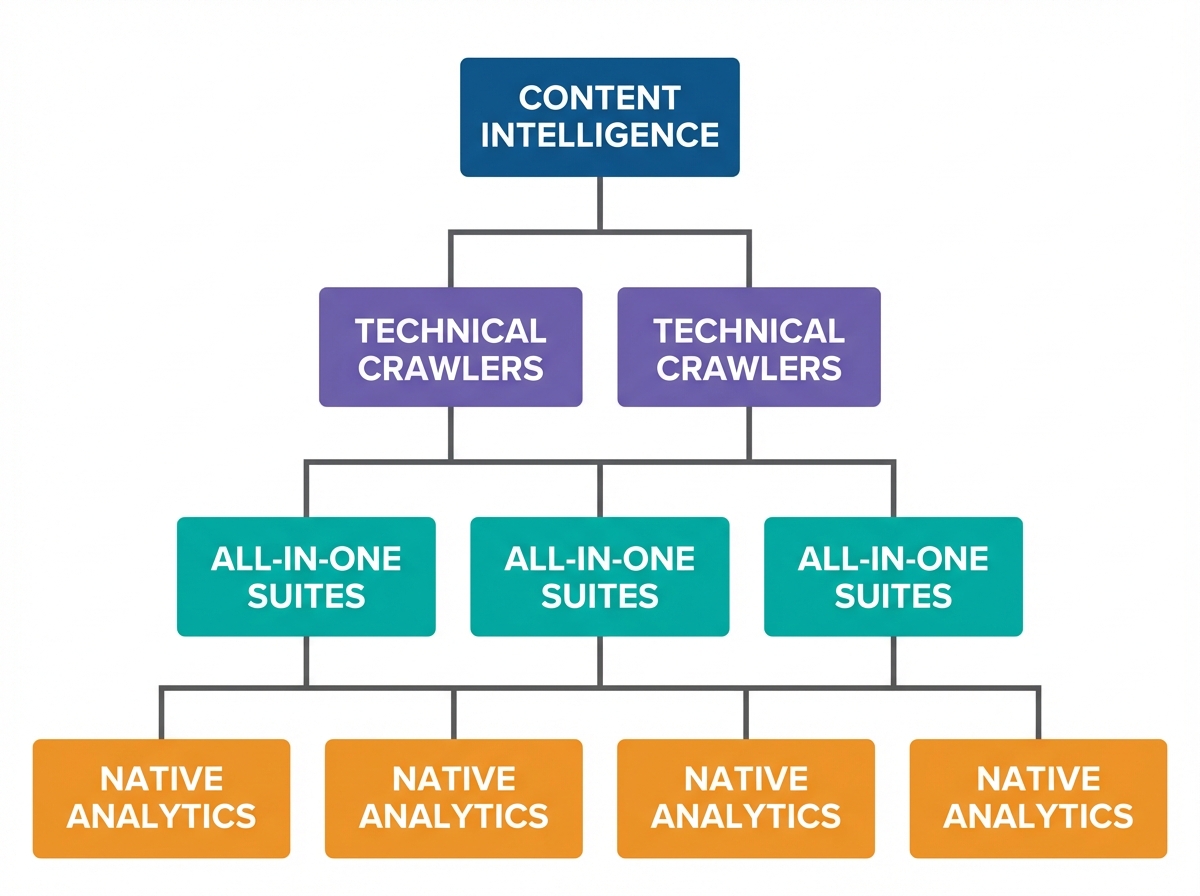
To fix those blind spots, you must assemble a stack tailored to specific operational functions. Categorizing applications into four distinct buckets prevents overlapping feature sets and wasted spend. You can manage backlink analysis and basic site audits using all-in-one suites, which offer immense convenience by centralizing your market research. The tradeoff is depth; while you might spot a slow-loading page in a broad suite, you will often lack the specialized waterfall charts needed to pinpoint exactly which JavaScript file causes the delay.
Content intelligence platforms occupy the second bucket. You use these specialized applications to focus entirely on semantic relevance and topical authority. They allow you to analyze current top-ranking pages to generate exact entity recommendations, word counts, and structural outlines for your writers. While they lack off-page or backlink databases, they vastly outperform general suites when you need to actively write and optimize copy for search intent.
Technical crawlers form the third critical category. Built specifically for structural analysis, these applications allow you to spider your website exactly as a search engine does. You can use them to identify complex redirect loops, orphan pages, canonical tag errors, and server response codes. Though intimidating for beginners, they provide the only reliable way to ensure search engines can actually render the pages you publish.
Search engines provide native analytics directly to webmasters. These free utilities deliver undeniable accuracy regarding your own traffic, core web vitals, and penalty status. Relying exclusively on this category means you only react to changes rather than proactively targeting competitor weaknesses. Building your stack means selecting a primary native analytics foundation, adding an all-in-one suite for market research, and layering in specialized applications as your operations mature.
The top platforms evaluated and ranked
Evaluating software requires looking past aggressive marketing claims to see how an application actually functions during daily marketing operations. You need to know if a platform will simplify your current workflow or simply add another dashboard to monitor. Finding the best SEO tools means analyzing specific capabilities across link databases, semantic content generation, and technical diagnostics. By examining the leading platforms on the market, you can build a growth stack that directly targets your primary business objectives without wasting budget on unused features.
1. Ahrefs: The industry standard for backlink analysis
For years, marketing professionals have relied on Ahrefs primarily for its massive, constantly updated link database. When you need to deconstruct exactly how a competitor achieved their domain authority, this application provides the granular data required to reverse-engineer their success. Its crawler is one of the most active on the web, meaning you can use it to detect newly acquired competitor links in a matter of days rather than weeks.
You use Ahrefs to run comprehensive link intersect analyses. By inputting three direct business rivals into the platform, you can cross-reference their backlink profiles to identify websites that link to your competitors but ignore your domain. This specific workflow eliminates the guesswork of link building, providing a direct target list of industry publications, partner directories, and resource pages that already demonstrate a willingness to link to businesses in your sector.
You can also use the platform's Content Gap feature to identify immediate traffic opportunities. By entering your domain alongside top competitors, you can use the software to highlight exact keywords your rivals rank for but your website misses, operating as a powerful keyword discovery workflow. This allows you to prioritize content creation based on proven market demand rather than brainstorming topics from scratch.
Beyond off-page metrics, the platform includes a comprehensive Site Explorer and Keyword Explorer. You can drop any URL into the search bar and immediately view its estimated organic traffic, top-performing pages, and exact ranking positions. However, accessing this level of data requires a significant investment — Ahrefs pricing starts from approximately $129 per month. For small businesses, this entry-level tier provides enough data for baseline monitoring, but agencies often require higher tiers to access historical data and larger export limits.
2. Semrush: The comprehensive visibility suite
Semrush integrates paid search, social media, and content marketing metrics into a single ecosystem. Where Ahrefs historically prioritized backlink discovery, Semrush built its reputation on the Keyword Magic Tool and deep competitor traffic analytics. When you want to analyze a competitor's entire search strategy, including the specific ad copy they use in paid campaigns, this platform delivers unmatched visibility.
You can use the Keyword Magic Tool to simplify the research process by automatically grouping millions of search terms into semantic clusters. If you search for a broad head term, you can use the system to categorize the results by search intent — labeling them as informational, navigational, commercial, or transactional. This feature allows you to export pre-sorted lists directly to your editorial calendar, ensuring your writers create the right type of content for the right stage of the buyer's journey.
You can also use the Site Audit tool within Semrush to track your technical health score over time. When you publish new pages, you can use the platform to automatically scan for broken internal links or missing meta descriptions, providing a prioritized list of fixes grouped by severity. This regular automated reporting helps prevent minor technical oversights from compounding into severe ranking drops.
This broad functionality comes with a comparable price tag; Semrush pricing starts from approximately $139.95 per month. The entry-level Pro plan includes access to their core keyword, domain, and backlink analytics, though advanced features like historical data and the content marketing platform require upgrading to the Guru tier.
Which is better: Ahrefs or Semrush?
Choosing between these two platforms depends entirely on your primary growth channel. Ahrefs is better if your strategy relies heavily on technical audits and aggressive link building, as its user interface for analyzing backlink profiles remains unparalleled. Semrush is better if you manage a comprehensive marketing campaign that includes Google Ads, social media tracking, and extensive keyword research, due to its superior intent-filtering capabilities and broader feature set. Both platforms represent significant monthly expenses, so reviewing your team's specific daily tasks will dictate which subscription provides a higher return on investment.
3. Rankdots: The leading AI-powered content intelligence platform
Rankdots fills a gap that legacy all-in-one suites frequently ignore: semantic content workflows and topical authority mapping. While traditional platforms provide lists of keywords based on search volume, you can use Rankdots to analyze the actual semantic relationships between entities on the search engine results page. When you want to capture higher market share in a specific industry niche, relying on isolated high-volume keywords is no longer sufficient.
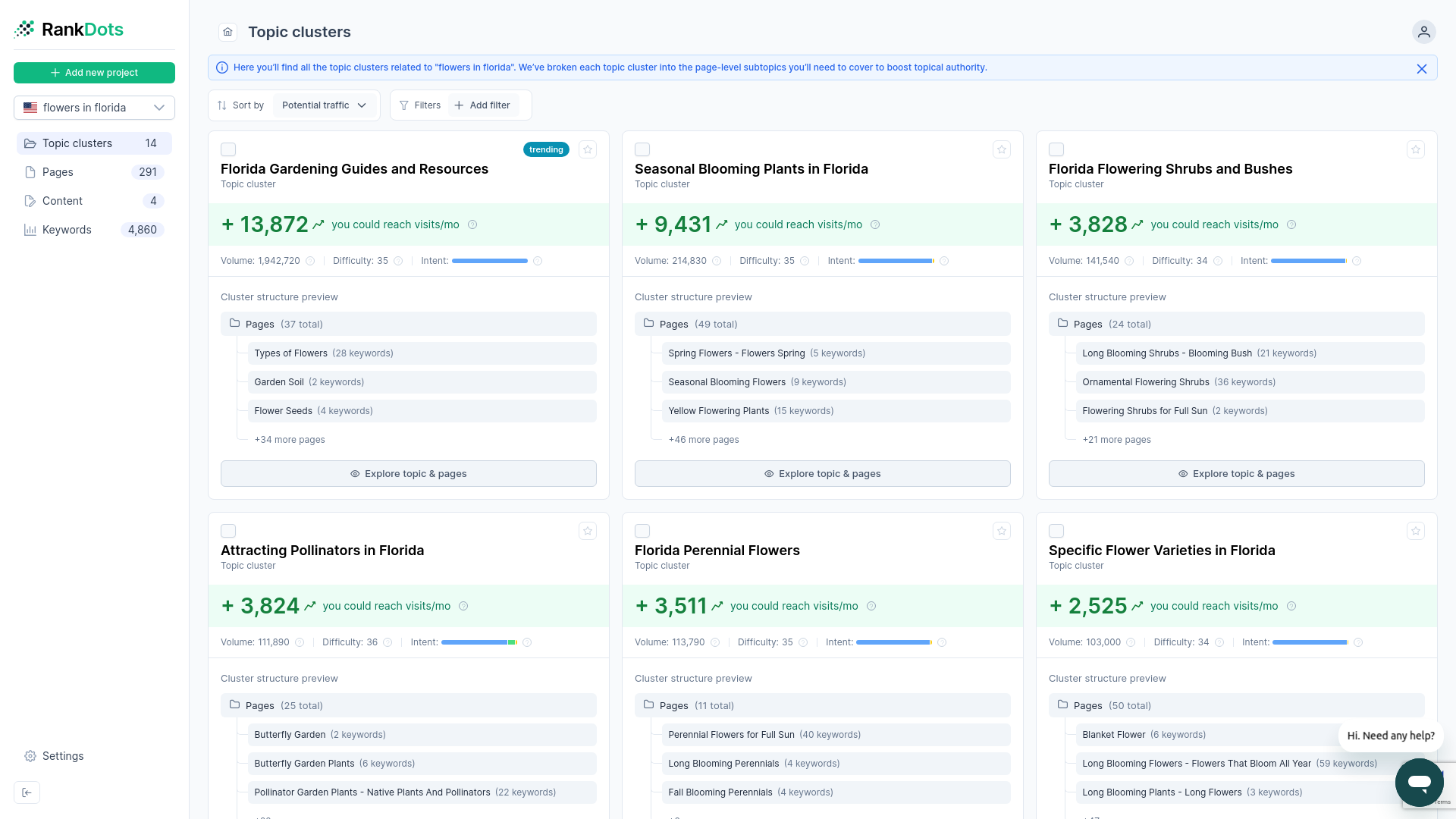
You can use Rankdots to generate the entire topical map of your industry. If you want to rank for enterprise software solutions, the platform generates a visual map of every related subtopic, question, and entity you must cover to prove comprehensive expertise to search engines. This approach shifts your strategy from publishing random blog posts to building deeply interconnected content clusters. You use the platform to identify exact gaps in your current coverage, ensuring your website comprehensively addresses the entire subject matter rather than just the highly competitive commercial terms.
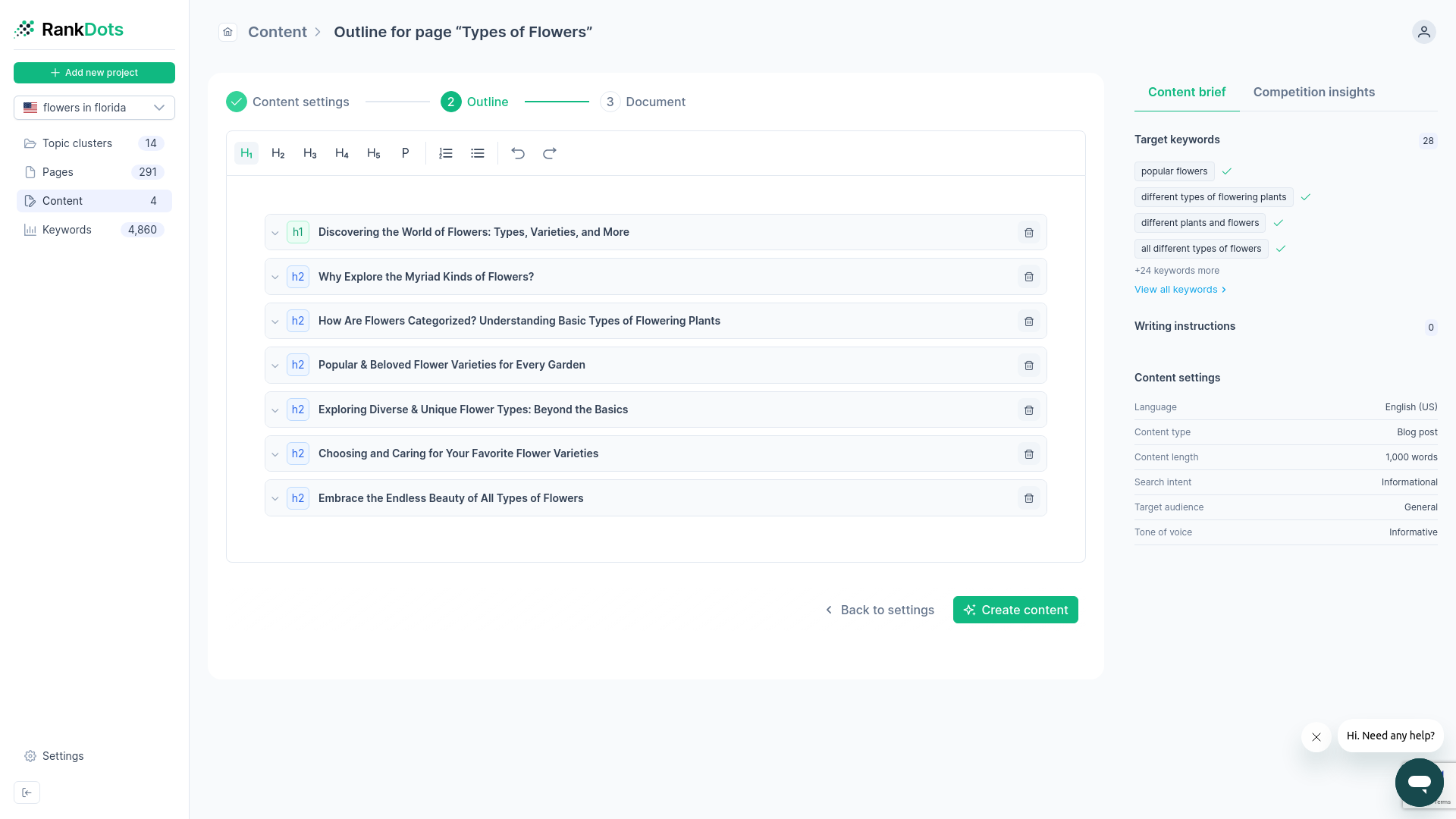
The platform integrates AI directly into the research phase. Instead of exporting data to a separate spreadsheet, you generate intelligent content briefs within the application. These briefs provide your writers with exact entity requirements, suggested word counts based on top-ranking competitors, and structural recommendations for headings. By centralizing the semantic research and briefing process, Rankdots significantly reduces the time it takes to move from keyword discovery to published article.
4. Surfer: Automated content optimization
Once your topical map is built, the actual writing process requires strict adherence to on-page optimization standards. You can use Surfer to analyze the top-ranking pages for your target phrase and generate a mathematical model for your own content. You can use it to evaluate keyword density, natural language processing (NLP) entities, heading structures, and image counts to provide a real-time optimization score as you write.
Manual content optimization takes hours and often misses critical latent semantic indexing terms required to rank. Manually cross-referencing competitor articles for missing vocabulary makes scaling production difficult. The process is slow and prone to human error. Shifting to an SEO writing assistant resolves this bottleneck entirely.

Using Surfer's AI-driven Content Editor to drop in an outline, write the article, and optimize the copy creates an immediate surge in productivity. The application highlights missing entities in real-time, allowing the marketer to naturally weave required terms into the narrative without resorting to keyword stuffing.
Budgeting for this platform requires understanding its specific tiered limits. Per the company's stated parameters, the Surfer Essential plan includes five AI articles per month, while the Scale plan offers 20. If your editorial calendar demands high-volume publishing, calculating these specific usage limits against your monthly budget is necessary to prevent workflow interruptions.
5. Screaming Frog: The premier technical crawler
Content and backlinks cannot compensate for a fundamentally broken website architecture. Screaming Frog SEO Spider is a desktop application designed to crawl your website exactly as a search engine bot does. It extracts comprehensive data on server responses, redirect chains, canonical tags, and page speed metrics. When you need to find all pages on a website and diagnose indexation problems across a massive domain, this tool provides the raw, unfiltered data required for technical troubleshooting.
Technical emergencies happen in digital marketing. When a top-performing product page suddenly drops from Google's index, you need a diagnostic tool immediately. The marketer knows they need to find a specific technical error, but industry-standard crawlers often look like the Matrix, overflowing with complex data tables and intimidating jargon.
Running a crawl with this software quickly isolates the exact technical error. You can rely on using Screaming Frog to find and reverse an accidental noindex tag applied during a recent site update, instantly restoring the page's eligibility to rank.
Beyond standard status codes, you can configure the crawler to perform custom extractions using XPath or regex. If you manage an e-commerce store, you can set the spider to scrape the exact stock status or price of every product page during a crawl. This specific functionality allows you to instantly identify active product pages that accidentally display 'out of stock' messages, preventing lost revenue.
While incredibly effective for diagnosing these critical errors, Screaming Frog is powerful but overly complex for average users. It lacks the polished, hand-holding user interface found in cloud-based suites. Navigating the application requires a baseline understanding of HTML, HTTP status codes, and server architecture. For non-developers, interpreting the raw data outputs into actionable marketing tasks involves a steep learning curve, though mastering the tool is essential for anyone responsible for site health.
What are the best SEO tools for e-commerce?
Managing an online store introduces unique optimization challenges that standard blogs never face. E-commerce websites frequently deal with thousands of dynamically generated URLs, product variant pages, and complex faceted navigation systems. The best SEO tools for e-commerce must specifically address crawl budget management and duplicate content issues.
Screaming Frog is mandatory for e-commerce platforms. When a store allows users to filter products by size, color, and price, the CMS often generates unique URLs for every single combination. Without proper canonical tags, search engines view these variants as duplicate content, diluting your domain's ranking power. You use a technical crawler to map these dynamically generated URLs and ensure your canonical instructions point search engines toward the primary product page.
Ahrefs and Semrush provide critical value for e-commerce keyword research. You must identify specific transactional modifiers that indicate high purchase intent. Instead of targeting a broad term like "running shoes," you use these platforms to discover long-tail, high-conversion phrases like "men's trail running shoes size 11 waterproof." Analyzing competitor product pages allows you to structure your category architecture around the exact phrases buyers use when their credit card is already in hand.
What are the best SEO tools for local businesses?
Local search operates on an entirely different algorithm than traditional national search. Proximity, NAP (Name, Address, Phone number) consistency, and Google Business Profile optimization dictate visibility in the local map pack. The best SEO tools for local businesses prioritize location-specific tracking and citation management over broad national search volumes.
Semrush offers dedicated local modules that track your visibility across specific postal codes. Traditional rank trackers fail local businesses because they report a generalized national average. If you operate a plumbing company in Chicago, you need to know exactly where you rank when a user searches from a mobile device in Lincoln Park versus the West Loop. Local grid tracking visualizes your ranking positions on a geographic map, showing exactly where your digital presence is strong and where competitors are capturing your local market share.
Local optimization requires monitoring business directories. Inconsistent phone numbers or outdated addresses across platforms like Yelp, Bing Places, and industry-specific directories confuse search engines and damage local trust. While comprehensive suites offer citation tracking, localized workflows demand exact geographic precision to ensure your Google Business Profile remains the dominant entity for regional service queries.
Foundational free and Google SEO tools
Before allocating budget to premium software, you must secure the baseline analytics provided natively by search engines. These free platforms deliver the most accurate data regarding your own website's performance because the information comes directly from the source. Establishing this foundation is a non-negotiable first step for any digital marketing strategy.
What are the best free Google SEO tools?
Every web property must install Google Search Console and Google Analytics immediately upon launch. Google's free tools are the best starting point for beginners. You can use Google Search Console as your direct line of communication with the search engine. You use it to submit XML sitemaps, monitor manual penalties, and track the exact queries driving clicks to your landing pages. Meanwhile, Google Analytics tracks user behavior after the click, allowing you to measure conversion rates, session durations, and the actual revenue generated by organic traffic.
Uncovering intent with freemium platforms
Beyond basic analytics, several freemium applications provide excellent tactical value for content planning without requiring a paid subscription.
When creating a new editorial calendar, you need to find low-competition questions your audience actively searches. Writing without data-backed search intent often results in content that fails to rank. The marketer needs clear direction.
Using Answer The Public with the keyword 'real estate agent' to find related question keywords provides an immediate solution. You can use the tool to visualize the exact who, what, where, when, and why queries users type into search engines, transforming a blank screen into a structured list of highly relevant, user-focused blog topics.
Can I do SEO without tools?
You can perform basic on-page optimization, write quality content, and ensure mobile responsiveness without paying for software. However, there is a definitive breaking point where manual efforts fail to scale. A business outgrows free platforms the moment they need to analyze competitor strategy.
Google Search Console tells you everything about your own site but reveals absolutely nothing about why a rival outranks you. When you need to view a competitor's backlink profile, estimate their total organic traffic, or discover the historical search volume of specific commercial terms, free native properties fall short. You must transition to a paid platform when your growth requires competitive intelligence rather than just self-monitoring.
Free vs. Paid SEO Tools: Pros and Cons
Pros
- Provides comprehensive self-monitoring and performance tracking for your own domain through native search engine properties.
- Enables foundational on-page optimization, mobile responsiveness checks, and basic technical auditing without recurring software expenses.
- Preserves your marketing budget during early growth stages when content creation takes priority over competitive intelligence.
Cons
- Offers zero visibility into competitor backlink profiles, historical search volume trends, or targeted keyword gaps.
- Lacks the scalable infrastructure required to accurately estimate competitor organic traffic and analyze commercial search terms.
- Forces manual data aggregation across multiple disconnected platforms, draining operational bandwidth that should be spent on strategy execution.
Frequently Asked Questions
Are free SEO tools enough for a small business?
How much should I budget for SEO software?
What is the most important type of SEO tool for beginners?
Do SEO tools guarantee higher search rankings?
Conclusion and final verdict
Selecting the best SEO tools for your organization requires matching technical capabilities to your exact financial constraints and team capacity. The market offers solutions for every operational tier, but buying software without a designated use case simply drains your marketing budget.
For businesses requiring comprehensive market data, pairing Google Search Console with an all-in-one suite like Ahrefs or Semrush provides the necessary competitive intelligence to scale. If those premium options stretch your budget too far, mid-tier alternatives exist — Moz Pro plan starts at approximately $79/month, offering a more accessible entry point for baseline rank tracking and site auditing. For teams prioritizing content production, investing heavily in a semantic engine like Rankdots ensures your publishing efforts align perfectly with algorithmic expectations.
However, accumulating applications does not automatically generate revenue. Having assembled a reliable stack of automated software and analytics, you must now use your own industry knowledge to refine the tool-generated recommendations and outpace competitors. Relying purely on automated metrics without applying human context leads to robotic, low-quality strategies. You can use an AI text editor to suggest adding fifty specific entities to a page, but a human strategist must determine how to weave those terms into a compelling narrative that actually converts a reader into a paying customer.
Your immediate next step is to conduct a software audit of your current stack. Identify one manual, time-consuming task you perform weekly (whether it is mapping topical clusters or checking for broken links) and implement a specific tool from this list to automate that exact workflow. Software provides the raw data; your strategy executes the growth.
Turn organic search data into measurable revenue
Stop guessing which search terms drive actual conversions. Centralize your technical site audits, semantic content research, and backlink analysis into a unified workflow that scales your traffic.